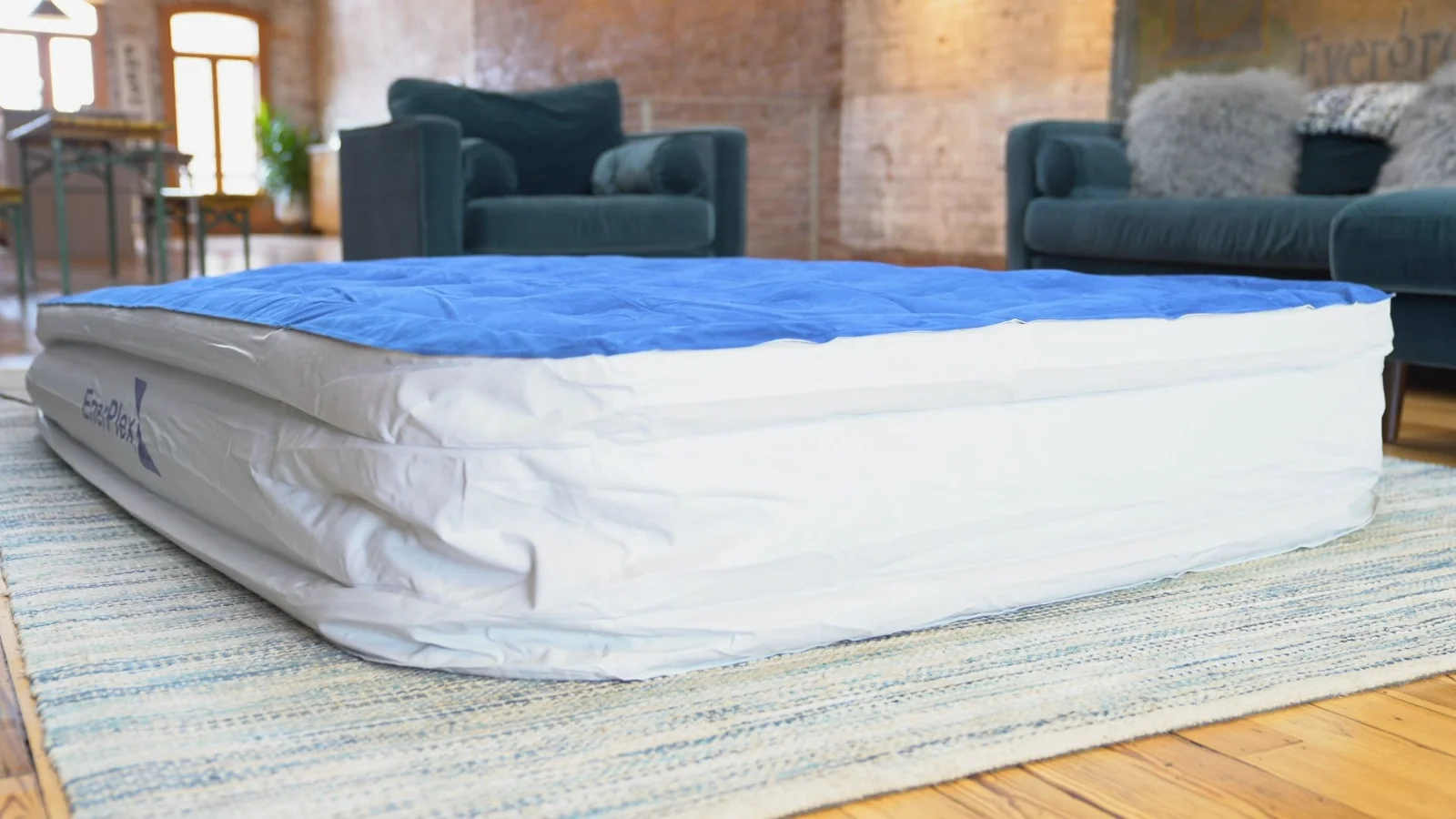
No. 1
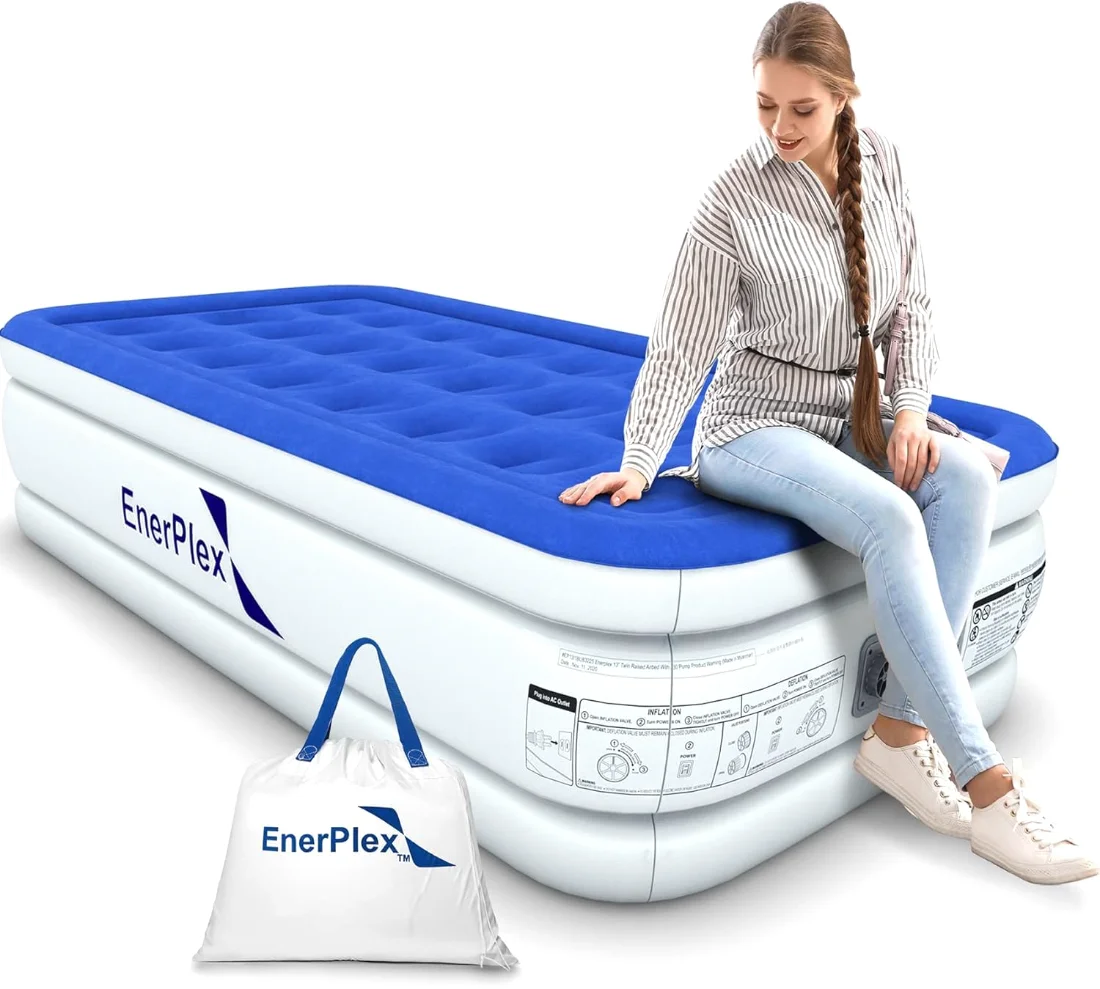
16-Inch Twin Airbed with Built-in Pump
$67.994.4(34,976)

Inflatable beds with the pump built in
Double-height airbeds that stand as tall as a real bed, nine-inch mats that live in a tent bag, a bumpered travel bed for the smallest guest, memory foam pillows you tune by the handful, and the scale that keeps score in the morning. The whole EnerPlex range is on this one page, and every card buys in one click.
The range, cut like a mattress
Ranked by nothing but review pools, one card per family: the six pieces of the EnerPlex range with the largest rating pools, straight across the lines.
No. 1
No. 2
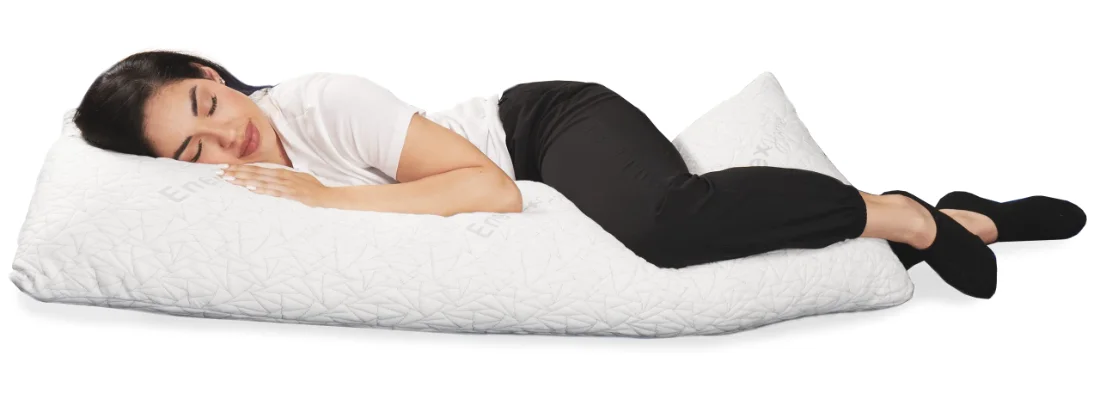
No. 3
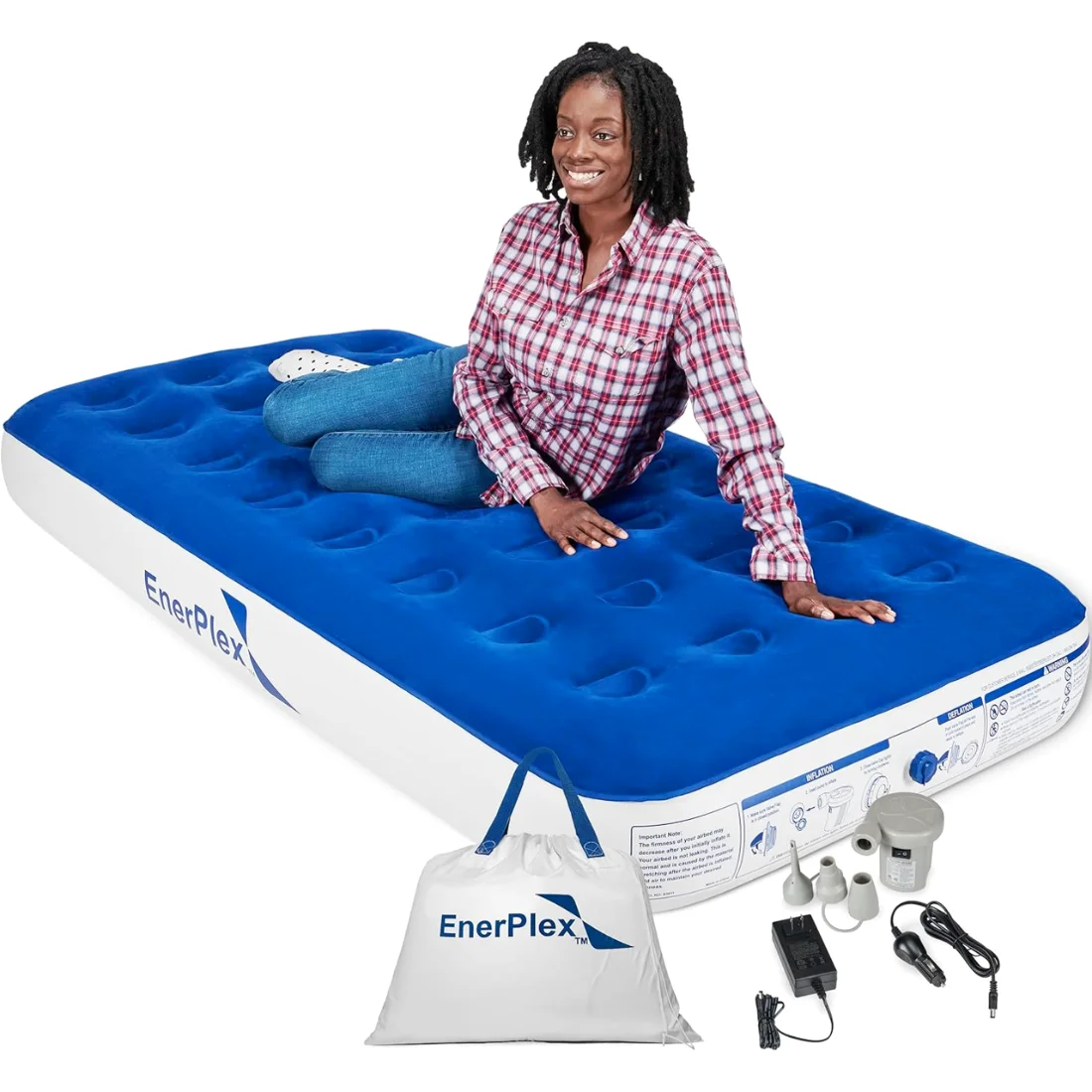
No. 4
No. 5
No. 6
Double height means the sleeping surface stands as tall as a real bed, so guests sit down onto it instead of climbing up off the floor. Every bed on this layer carries its pump inside the chamber: no separate box to find at midnight, no borrowed inflator. Turn the dial, and the coil-beam core does the rest in about two minutes.
The one guest rooms start with
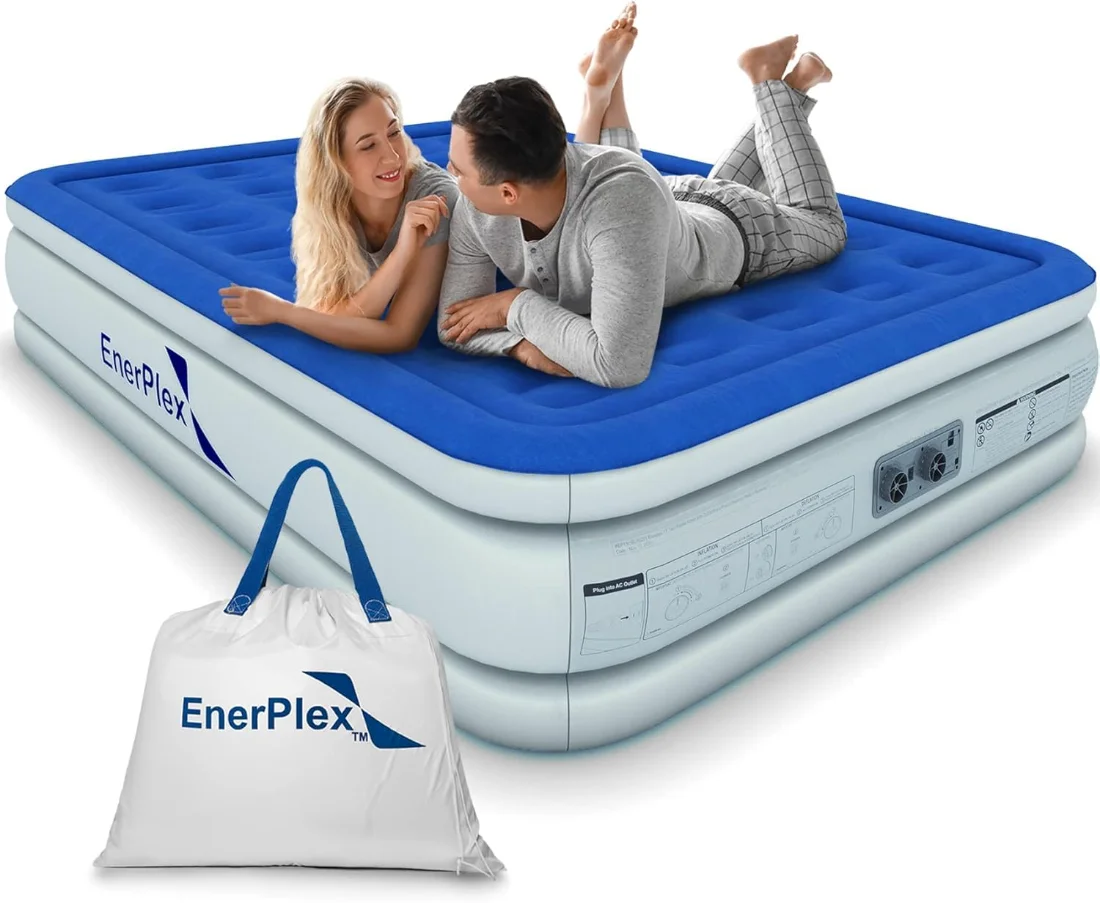
Sixteen inches tall and queen-wide: guests sit down onto it, not down to the floor, and the pump in the side does the whole job in about two minutes.
The guest answer for narrow rooms: a twin at real-bed height, pump in the side wall, sheets on and done before the kettle clicks off.
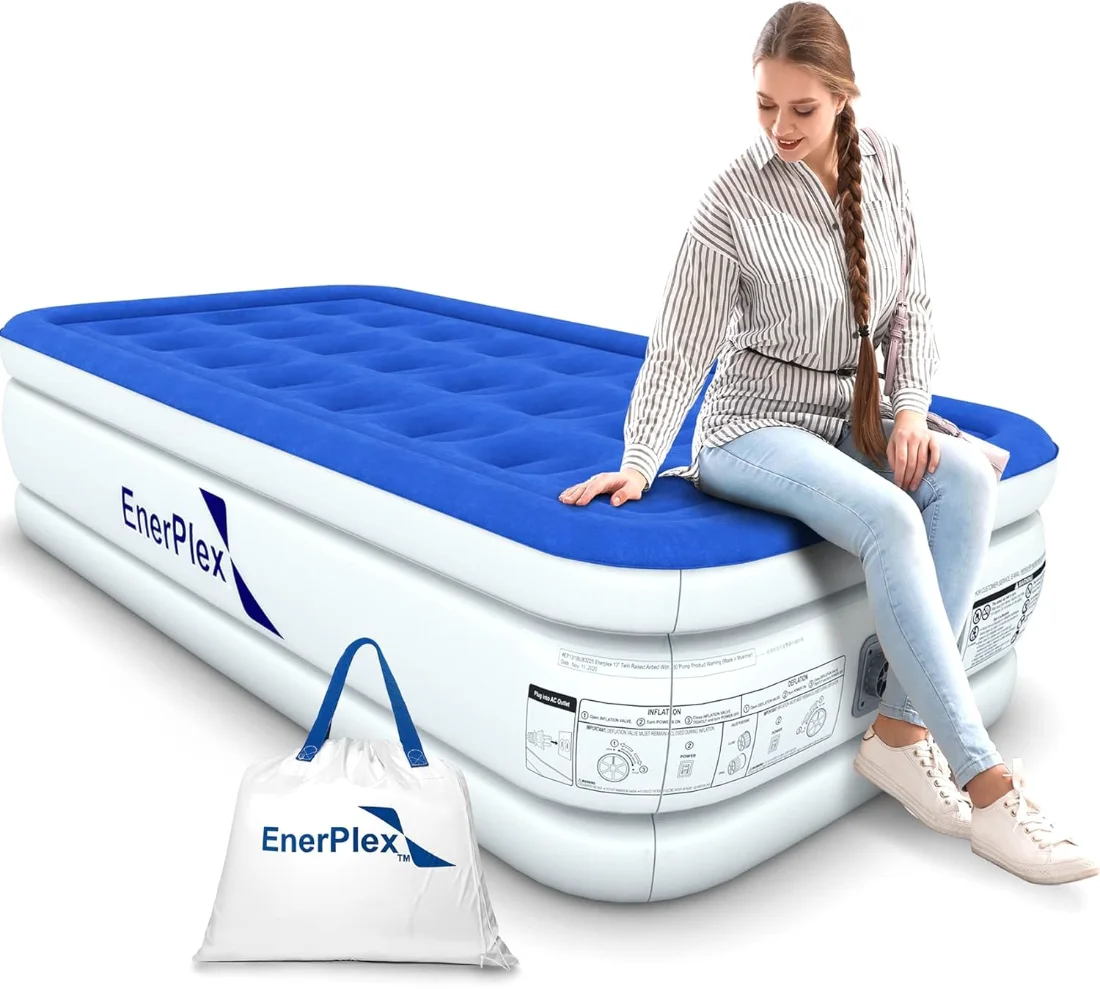
The lower twin of the double-height pair: thirteen inches for rooms where headroom or storage is tight, same dial, same two minutes.
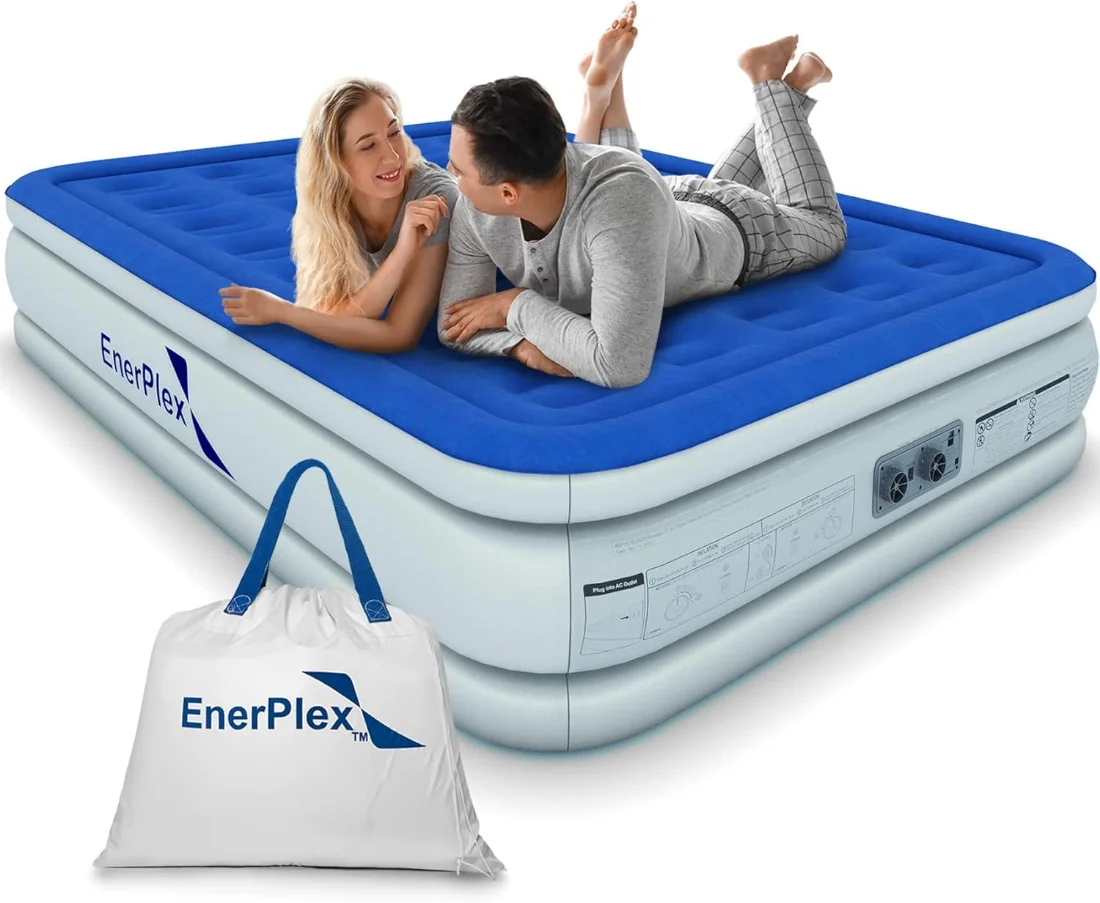
The tallest bed we make: eighteen inches puts the sleeping surface at armchair height, which grandparents notice on the first morning.
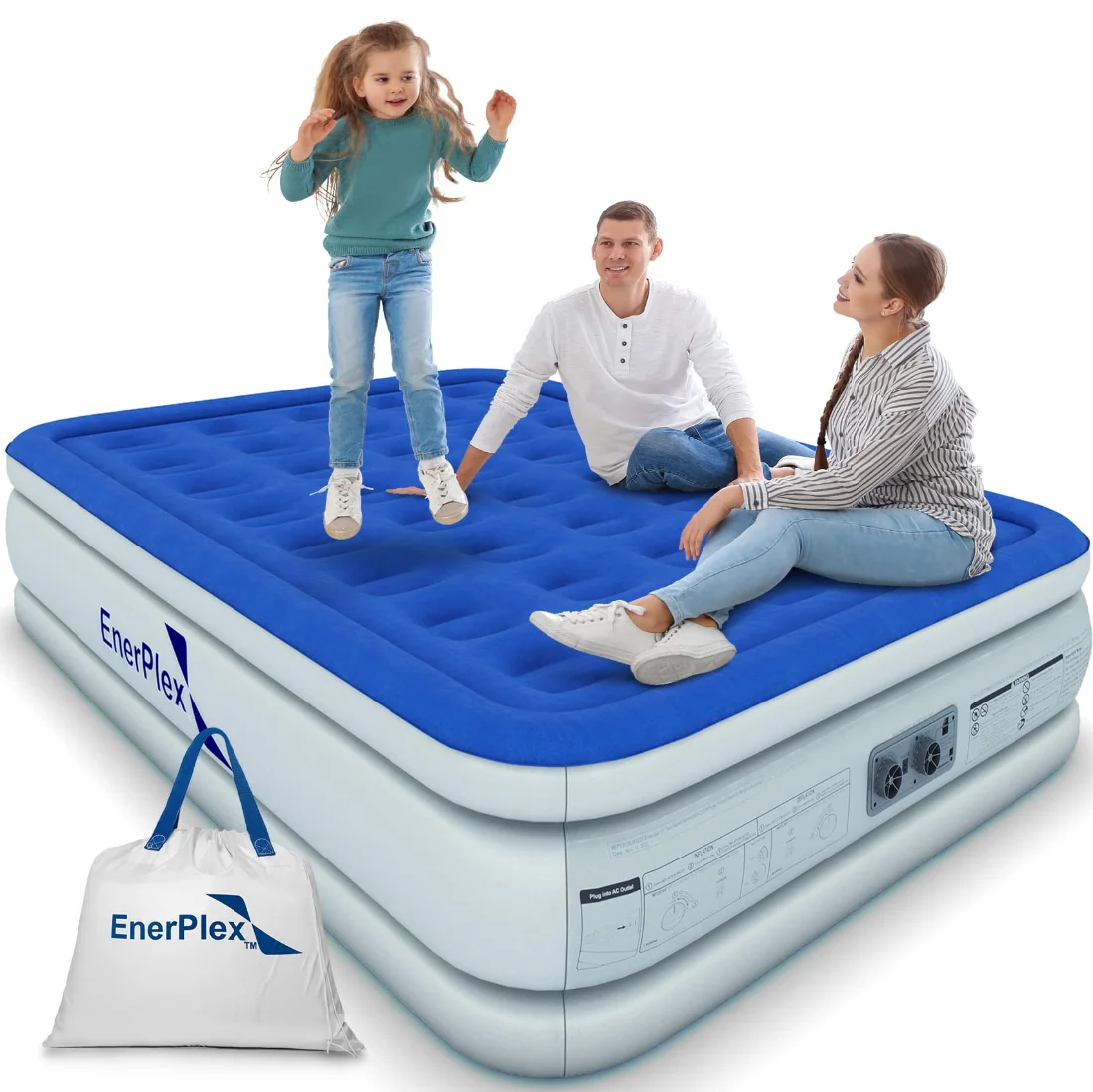
Two full sleeping lanes and one pump: the king covers a couple without a midnight border dispute, and still packs into one bag.
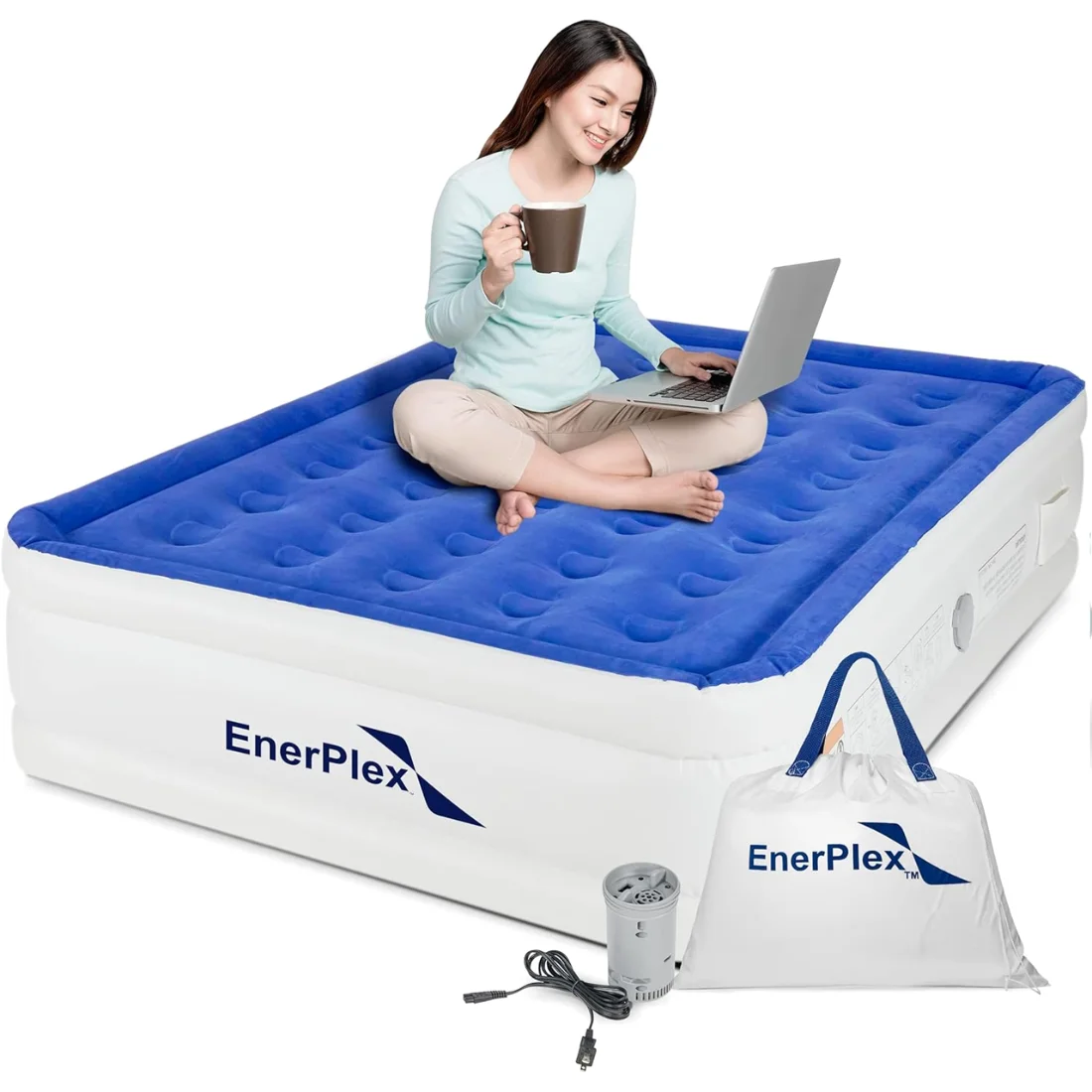
A double-height queen with a detachable pump: inflate at home, or take the pump where the bed goes. The travel bag in the box carries both.
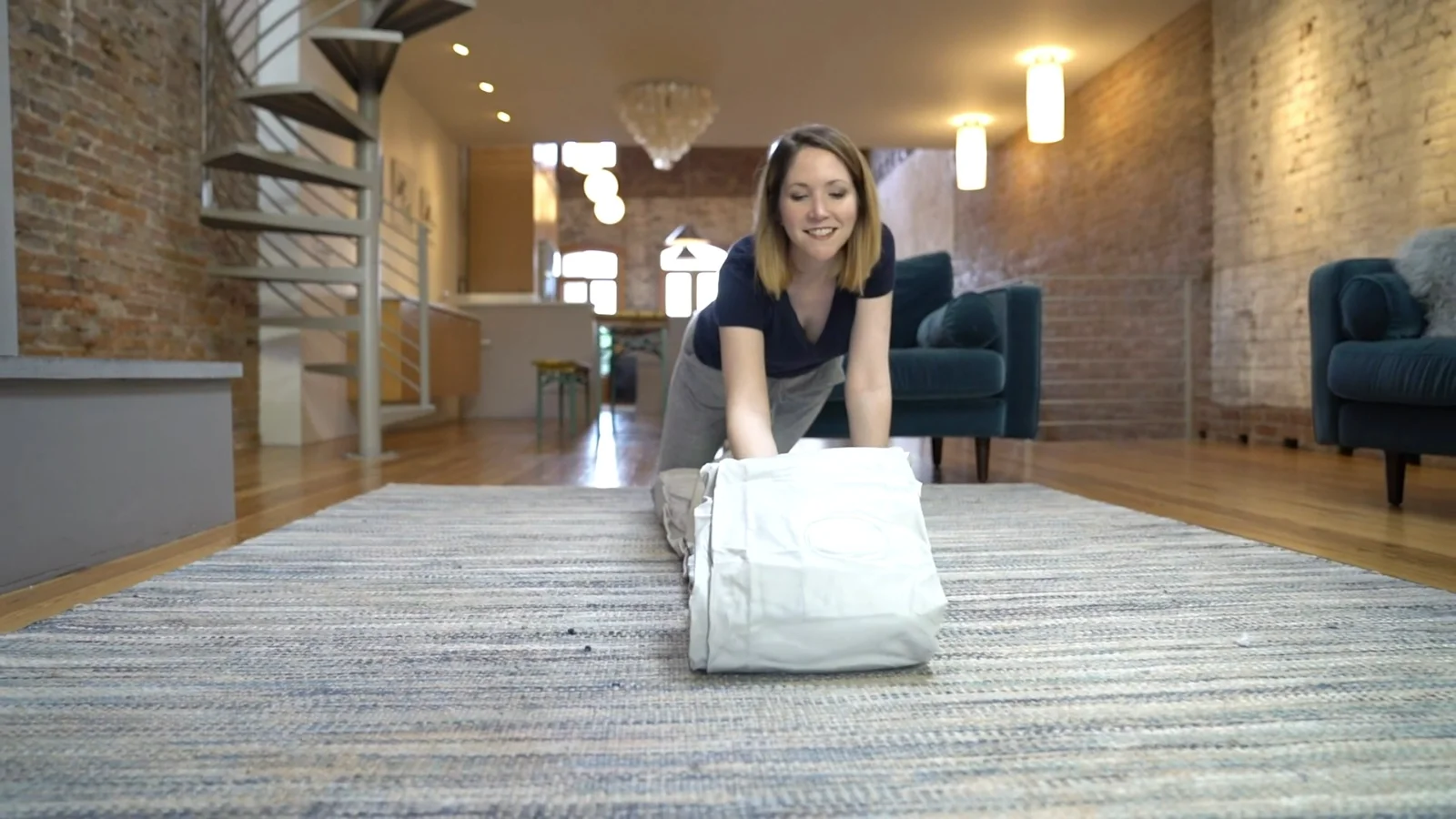
Our own film of the 16-inch queen: out of the bag, pump dial on, and a made bed before the kettle boils.
Filmed on the 16-inch queen airbed; the pump audio is unedited.
Two refinements on the same coil-beam core. The pillow-rest line raises the head end of the chamber so the pillow stops sliding to the floor at 3 a.m. The premium line adds a second, quiet pump that watches pressure through the night and tops the bed off, which is the closest an airbed comes to a promise about the morning.
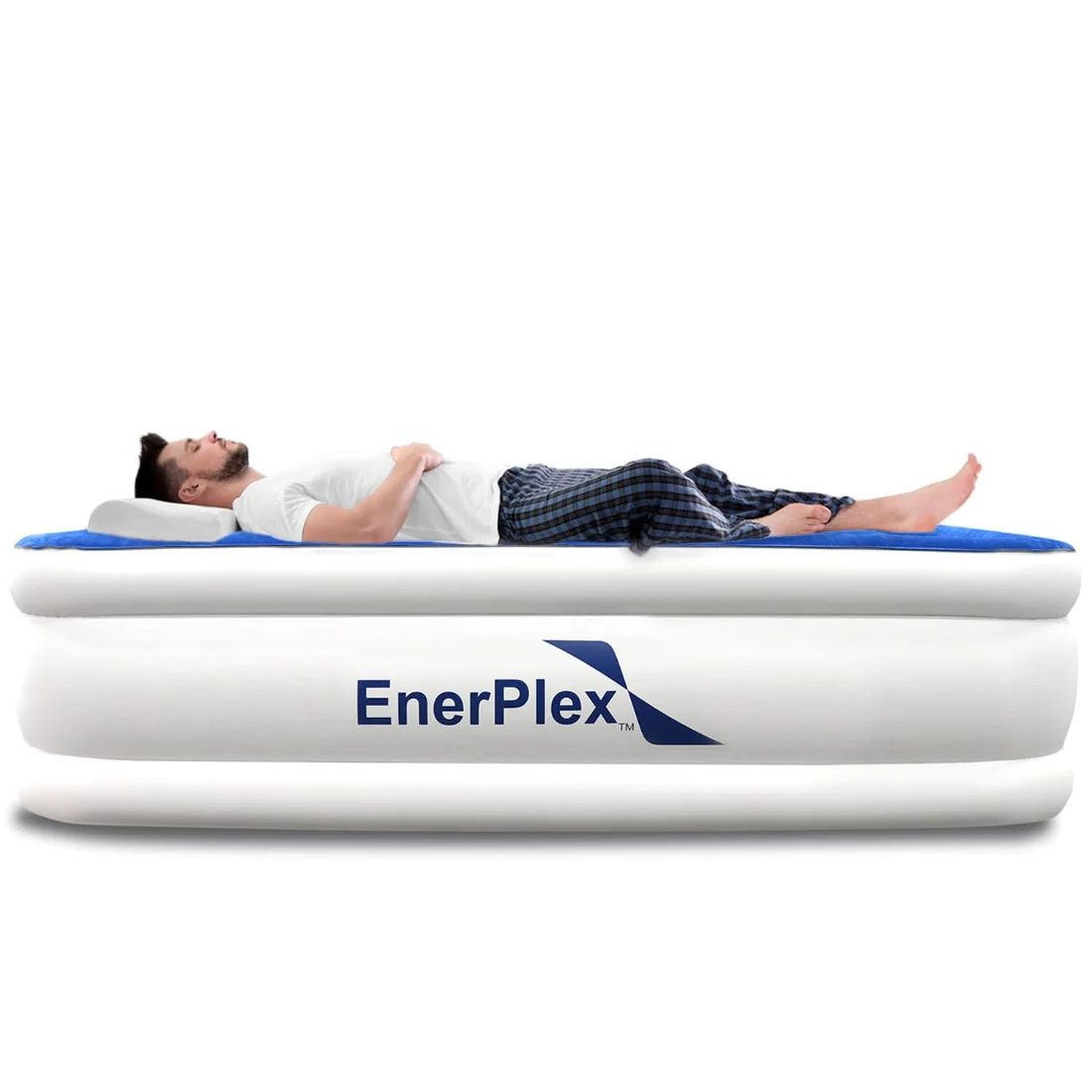
The low-profile queen of the pillow-rest line: easier under sloped ceilings and attic guest rooms, with the raised head end built in.
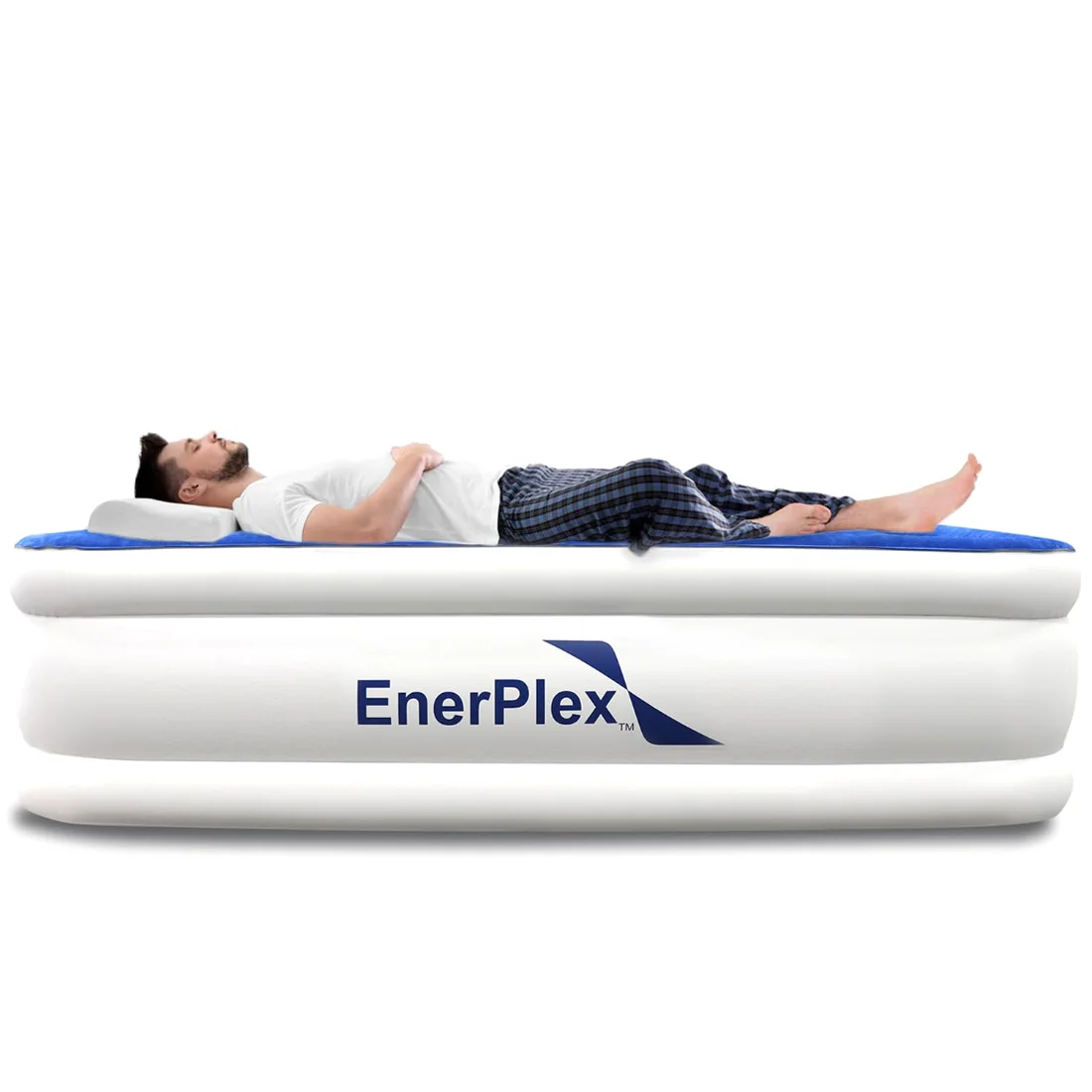
Fifteen inches with a built-in incline at the head: for the guests whose pillow always used to end up on the floor.
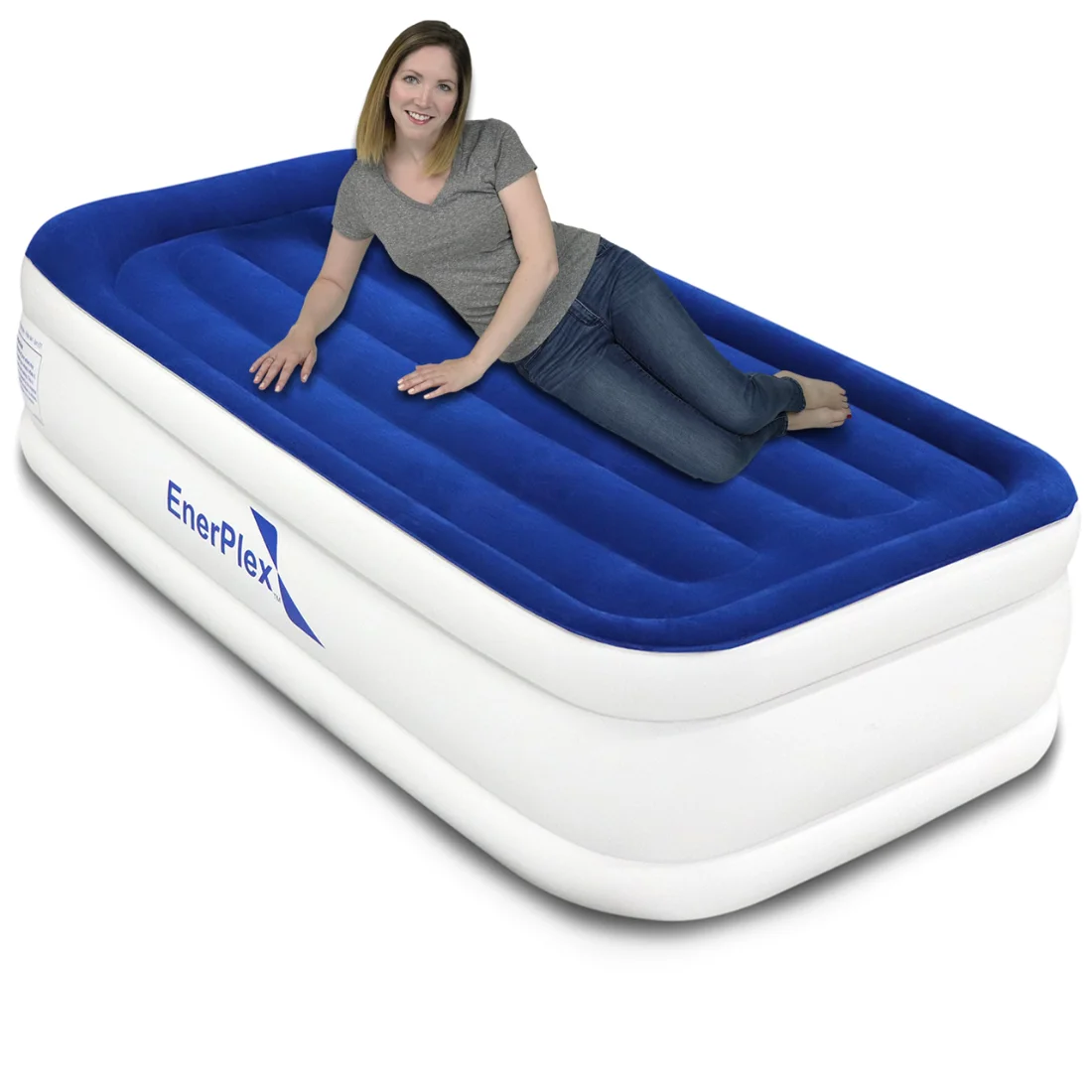
A twin with the head end raised in the chamber itself: the pillow stays put, and the top edge reads as a headboard.
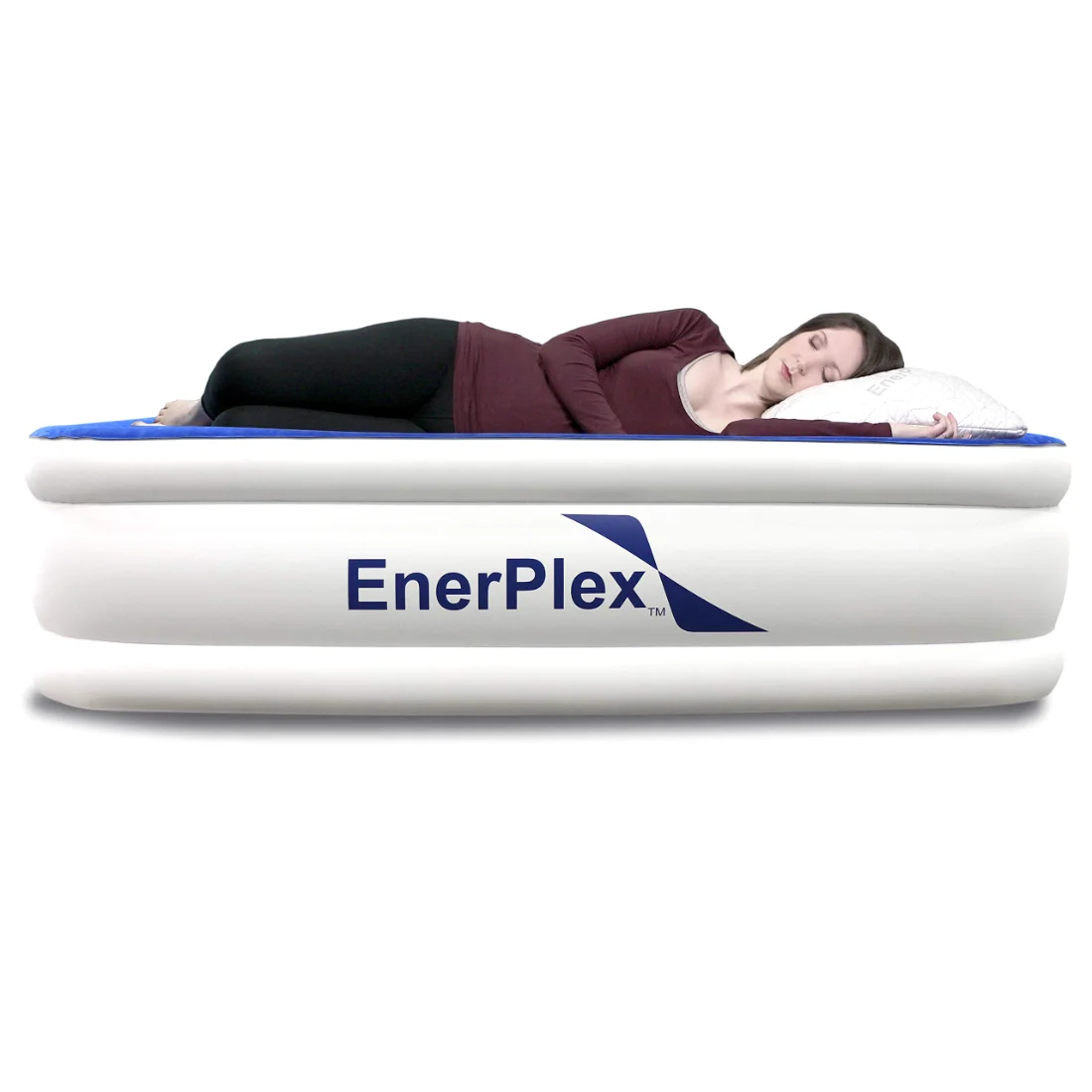
The flagship: a second, quiet pump watches pressure through the night and tops the chamber off, so dawn firmness matches lights-out.
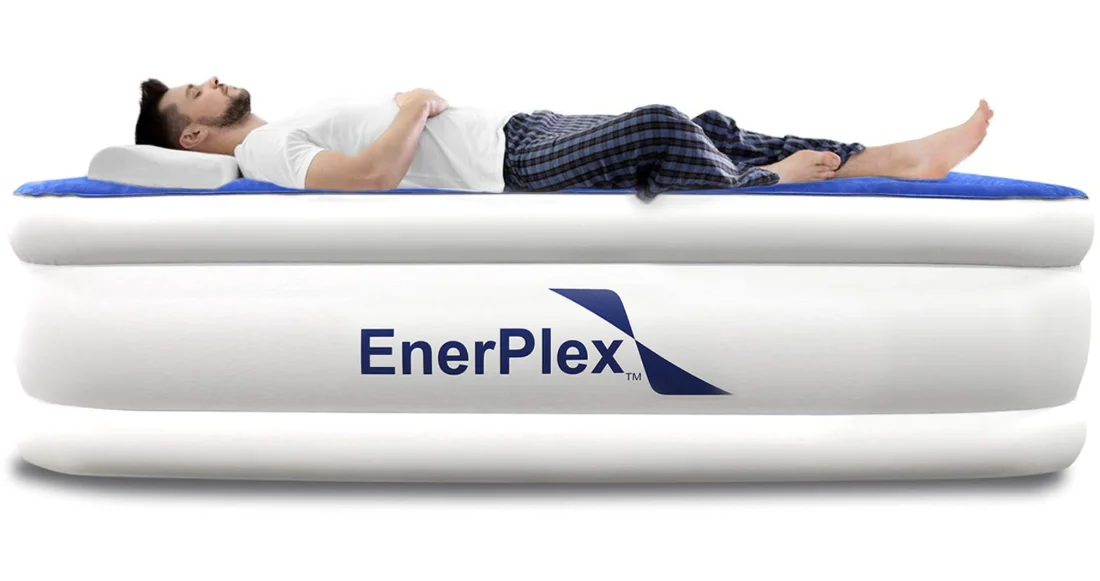
The raised-profile twin of the premium line: coil-beam core, flocked top, and the same two-minute dial as the big beds.
Production and history
Most inflatable beds are designed as a bag first and a bed second. We started at the other end, with the two minutes that decide whether a guest bed gets used at all: the pump. Every bed we make carries its own inflation inside the chamber or in the kit, sized so that the whole job, from opening the bag to tucking in a sheet, fits between a doorbell and a kettle.
The rest of the build follows from that decision. A pump is only worth two minutes if the chamber it fills holds its shape, so our cores are built from coil beams, dozens of vertical columns welded top to bottom, that pull the sleeping surface flat instead of letting it balloon into a dome. The top is flocked so sheets grip it. The base is textured so the bed stays where the room needs it. And because a bed that needs the pump again every hour is not a bed, we weld the seams and test against the one failure nobody forgives, the slow overnight leak.
The camping line trades height for headroom: a nine-inch profile that fits under a tent ceiling and packs into a shoulder bag. The rangers' packing advice puts something between your body and the ground before anything else, because ground moisture robs sleep of its heat; this layer is that something, with a pump that runs from the wall at home or the car at the site.
The smallest traveler, sorted
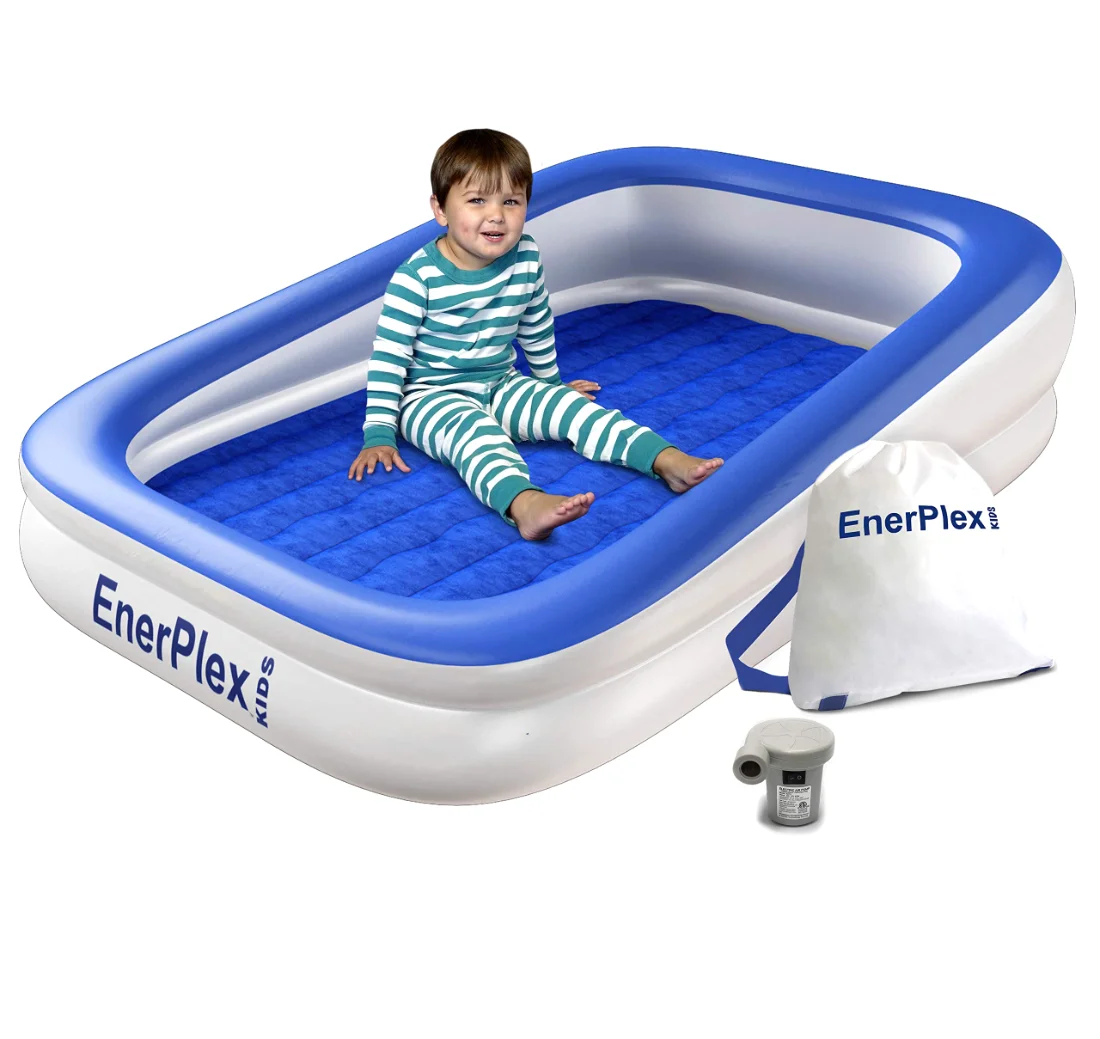
A toddler-sized inflatable with a raised bumper on every edge, sized so regular crib sheets fit. The pump finishes before the bedtime story does.
Nine inches between the sleeping bag and the ground, with wall and car power in the kit: the twin that started our camping line.
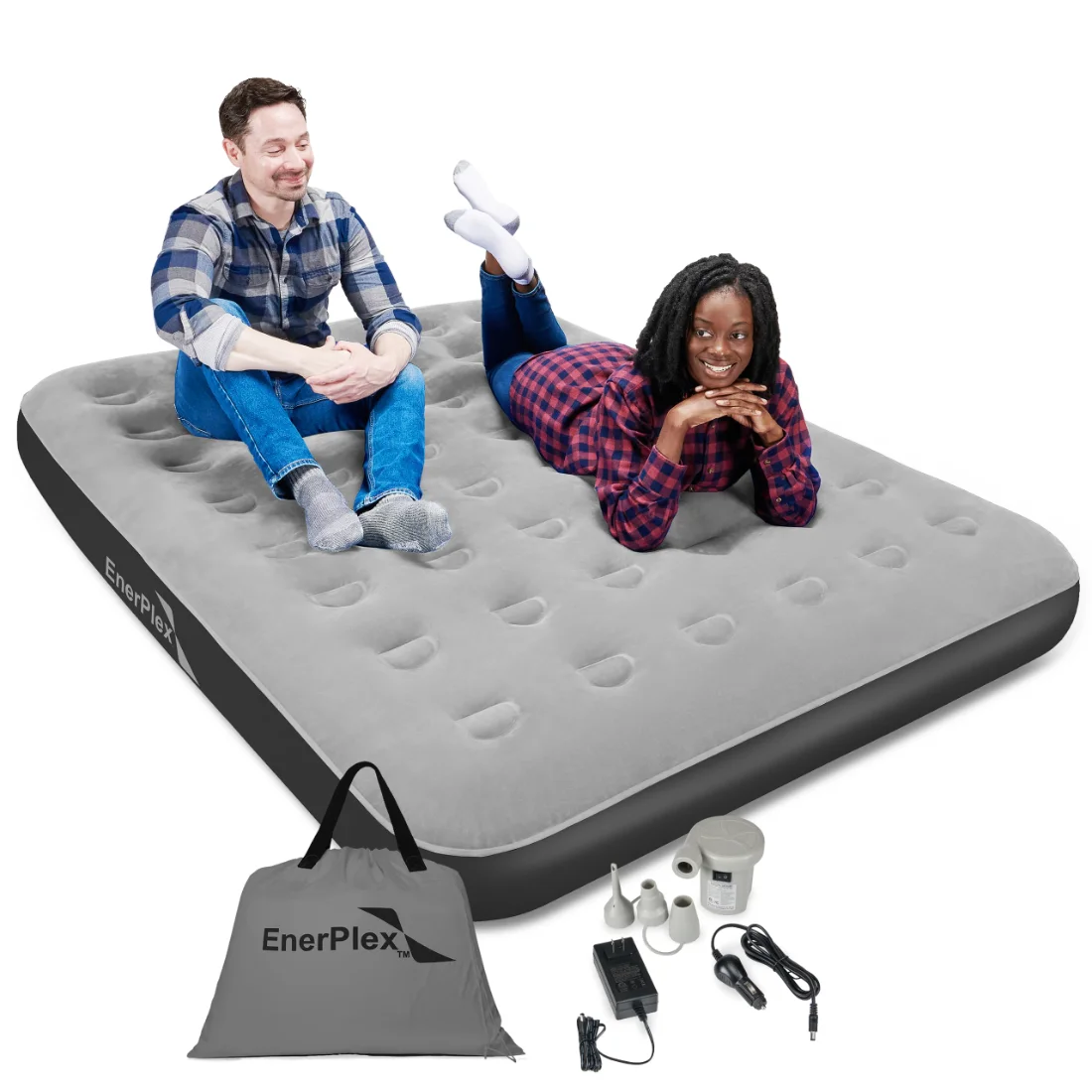
The campsite queen in tent-floor gray: low enough for headroom under the fly, wide enough for two bags to make peace.
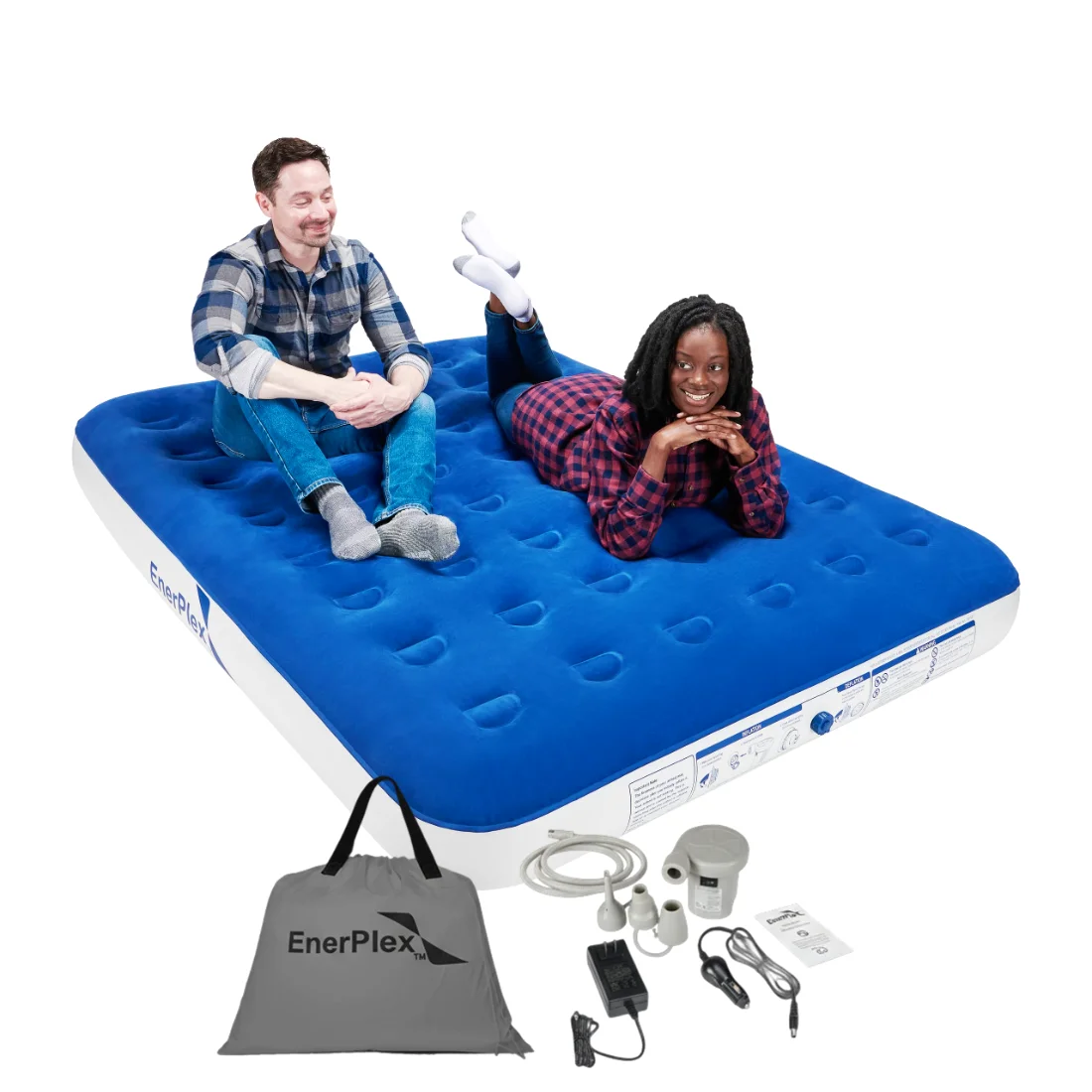
The same campsite queen in flock blue: nine inches of coil-beam air where the ground used to be.
An airbed has no springs to hide behind: it is fabric, welds and air, and the difference between a good night and a flat morning is decided by exactly those three things. Fabric weight, weld width and valve design are what separate one airbed from another, and all three are comparable against anything else on the market.
PVC
The chambers are triple-layer puncture-resistant PVC. That does not make a bed knife-proof, nothing inflatable is, but it is the difference between a bed that survives a decade of tent floors, pet claws that were not supposed to be in the guest room, and the corner of a bed frame, and one that does not.
COIL BEAMS
Inside every chamber, welded vertical beams pull the top and bottom sheets toward each other. Without them an airbed inflates into a dome and the sleeper rolls to the middle. With them the surface stays flat to its edges, which is also why two people can share the queen without meeting in the center at 3 a.m.
FLOCK
The sleeping surface is flocked, a velvet-like finish bonded to the PVC. Sheets grip it instead of skating off, and skin never touches bare vinyl. It is the same reason the surface reads warm to the hand where plain plastic reads cold.
WELDED SEAMS
Seams are welded, not glued, and the valve is built as a part of the chamber rather than an afterthought pressed into it. Most dead airbeds die at a seam or a valve; both places get the most engineering attention we have.
MEMORY FOAM
The pillows are filled with shredded memory foam, not a molded slab, and the fill is CertiPUR-US certified. Shredded fill can be added, removed and washed, which turns loft from a factory decision into your decision.
GLASS AND SENSORS
The Fit scales are tempered glass over four load sensors, with Bluetooth to hand each weigh-in to the app. A scale earns trust by repeating itself: same tile, same time, same number twice in a row.
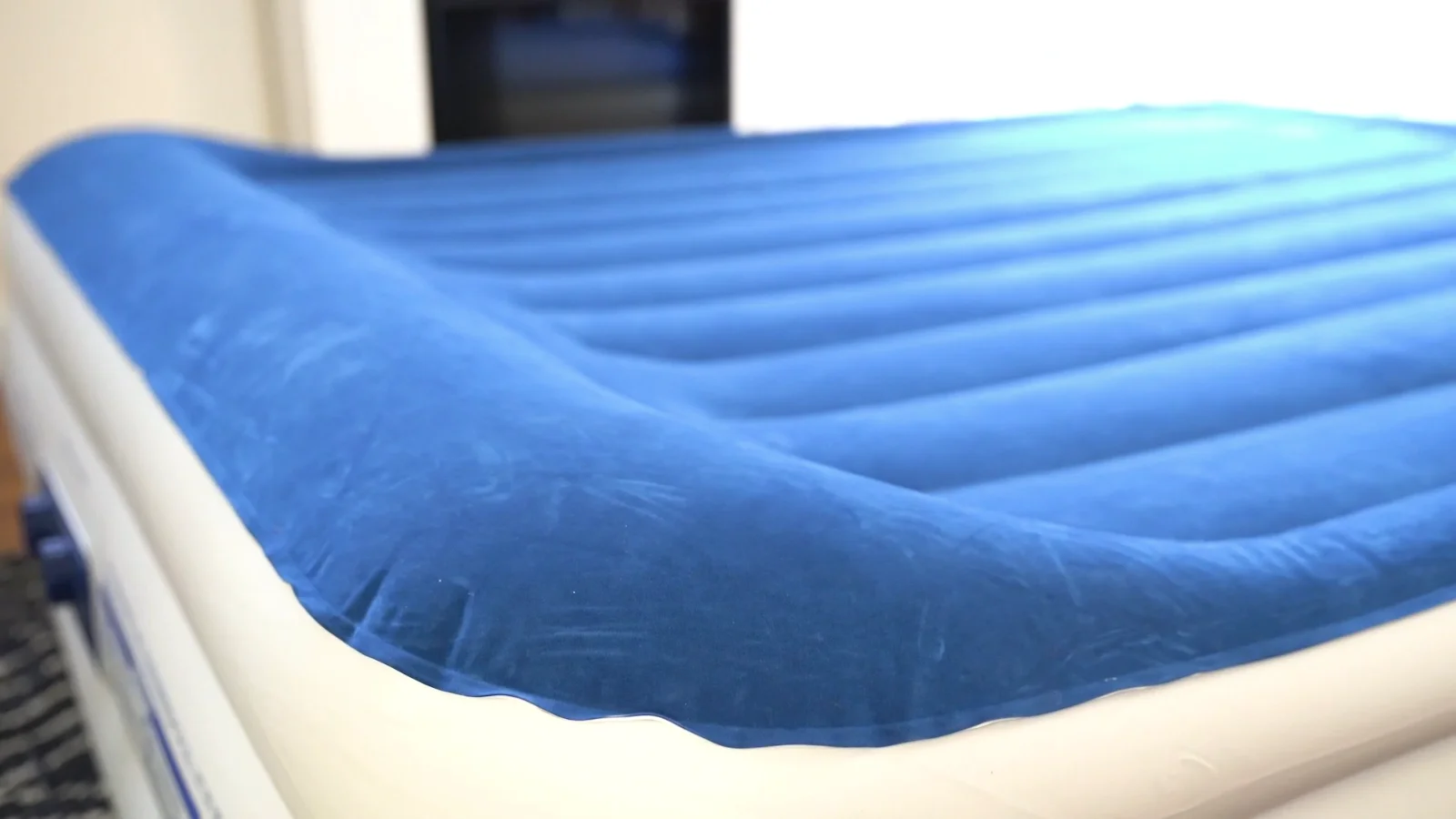

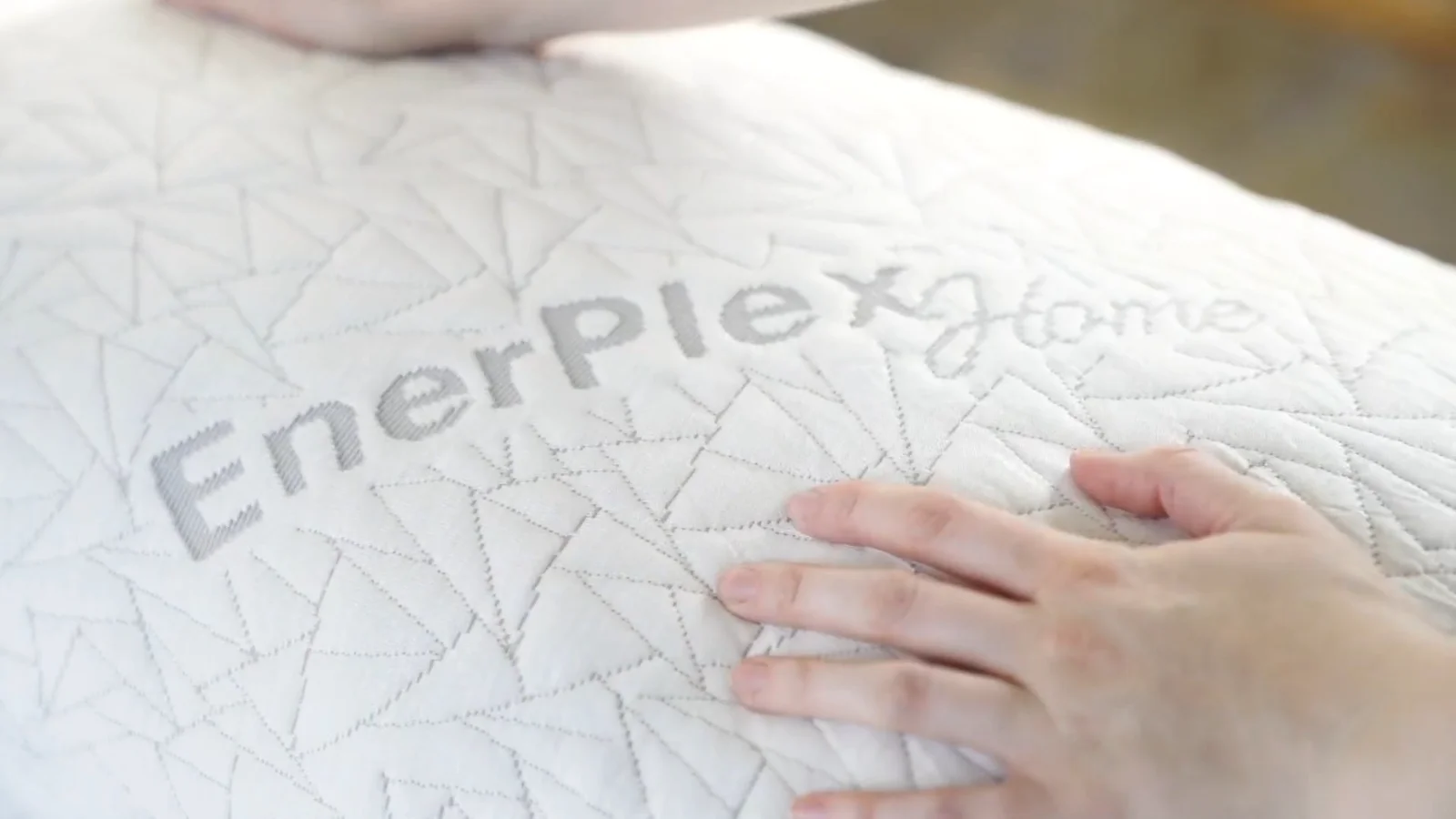
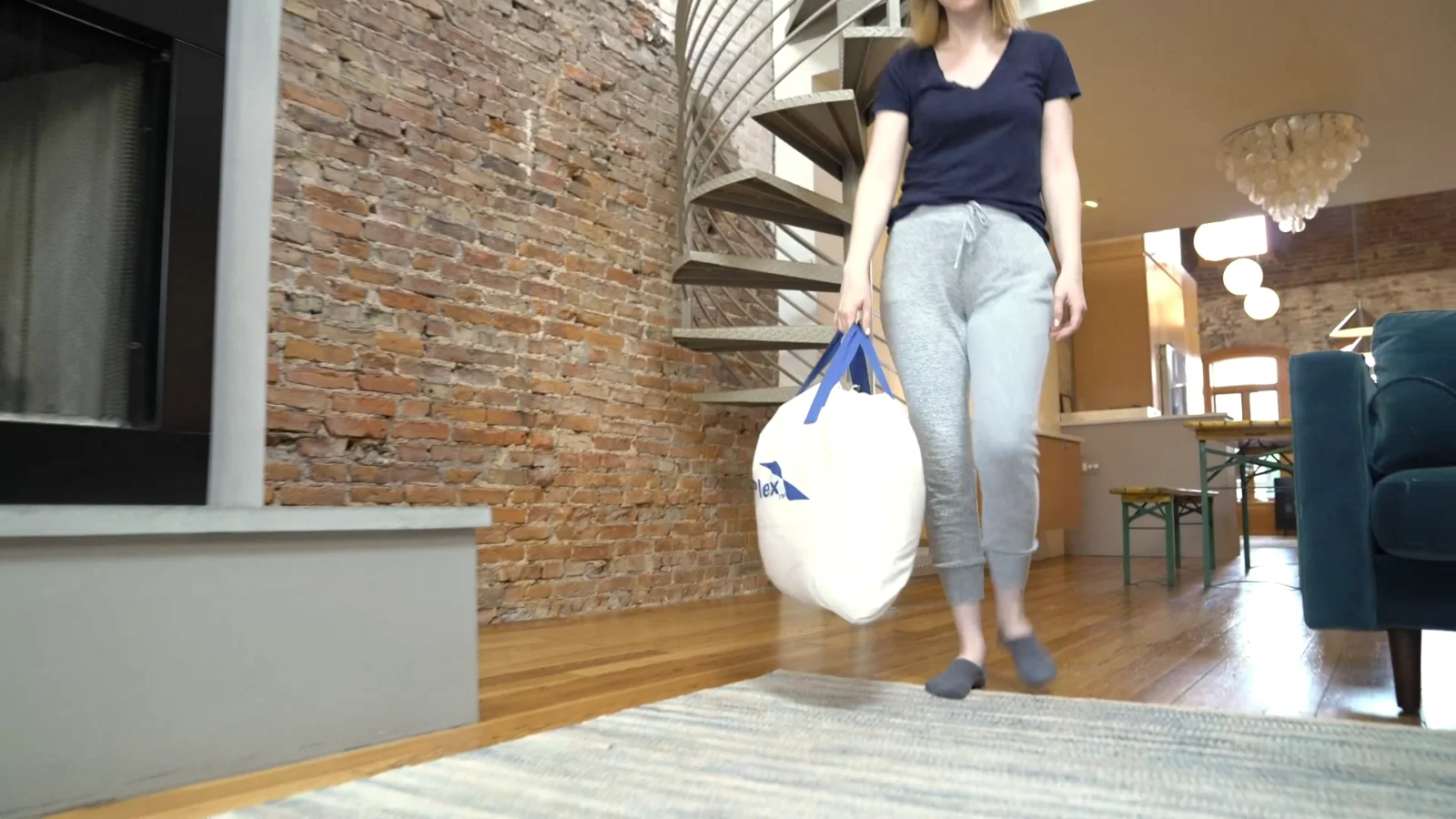
Carried in, unrolled, inflated, slept on: stills from our own product films, in the rooms and campsites where the beds actually work.

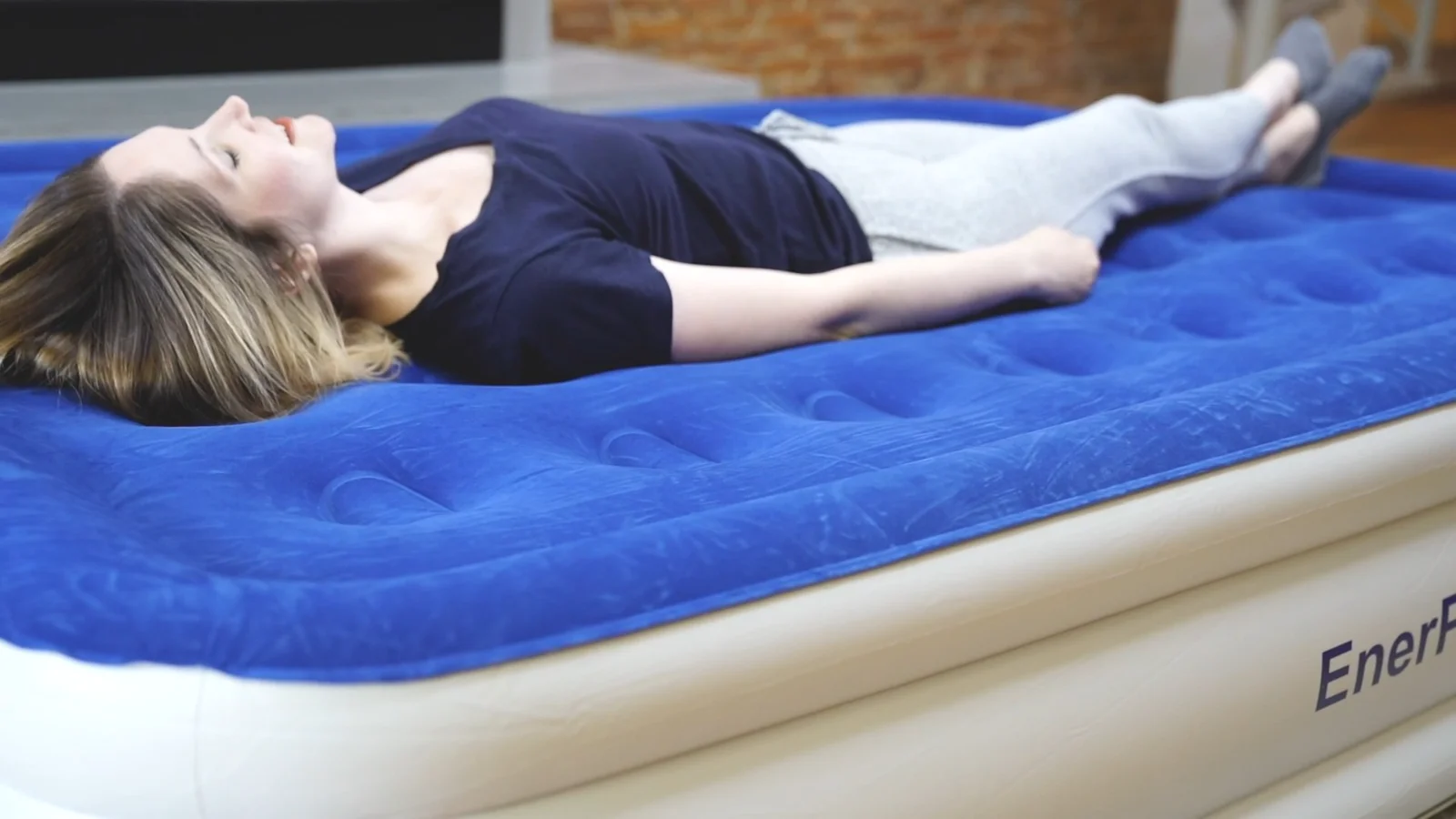
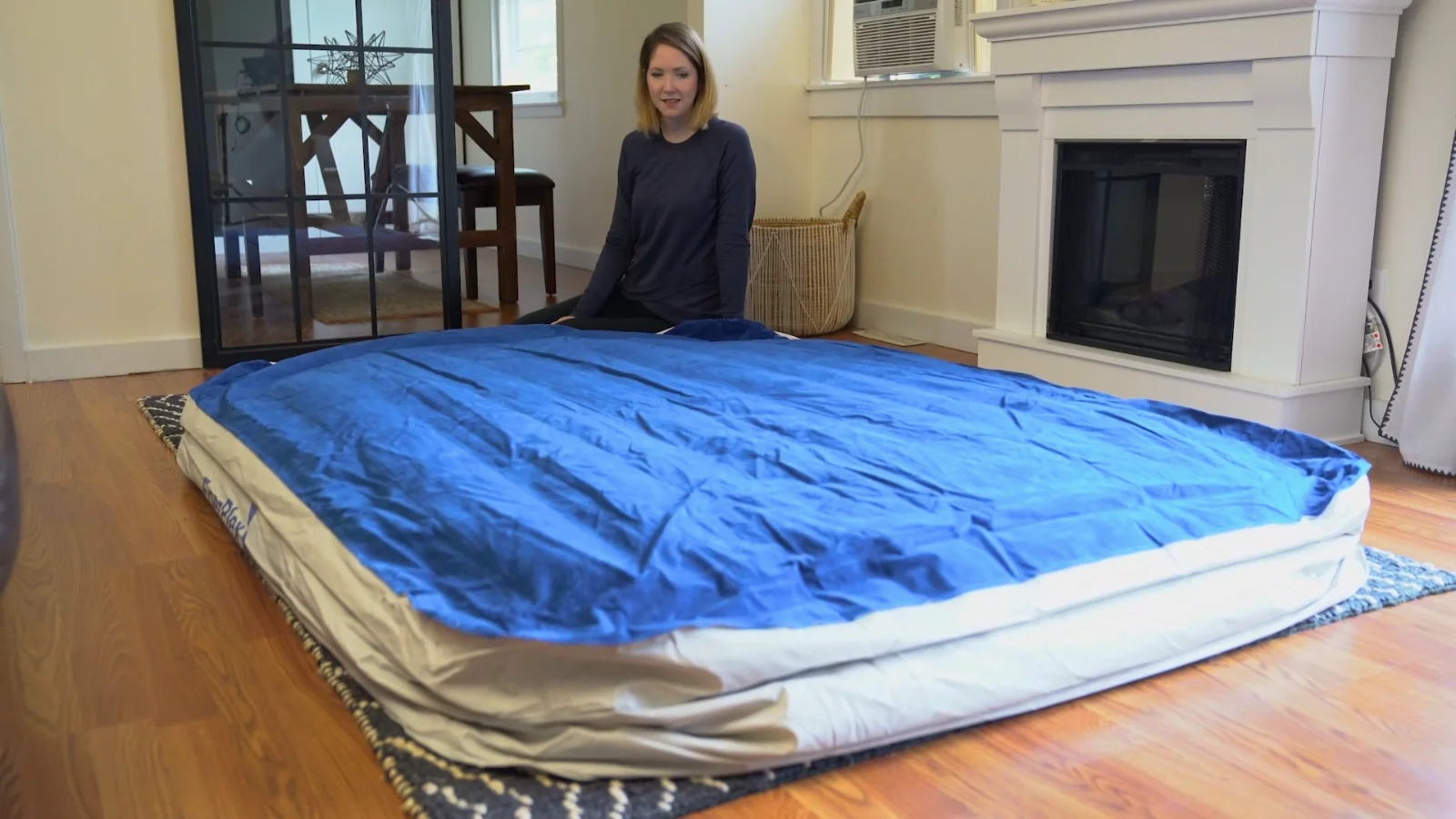
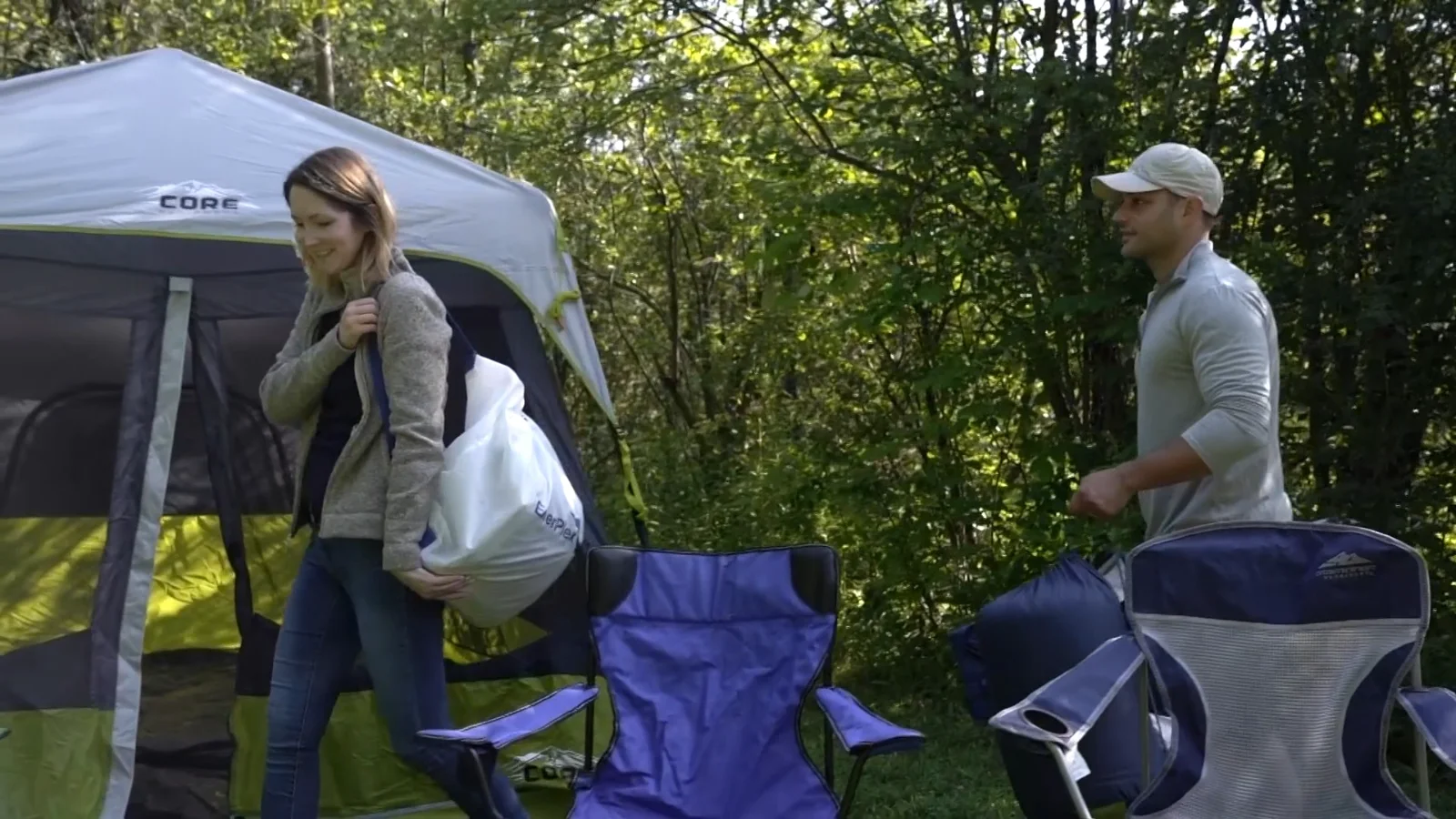
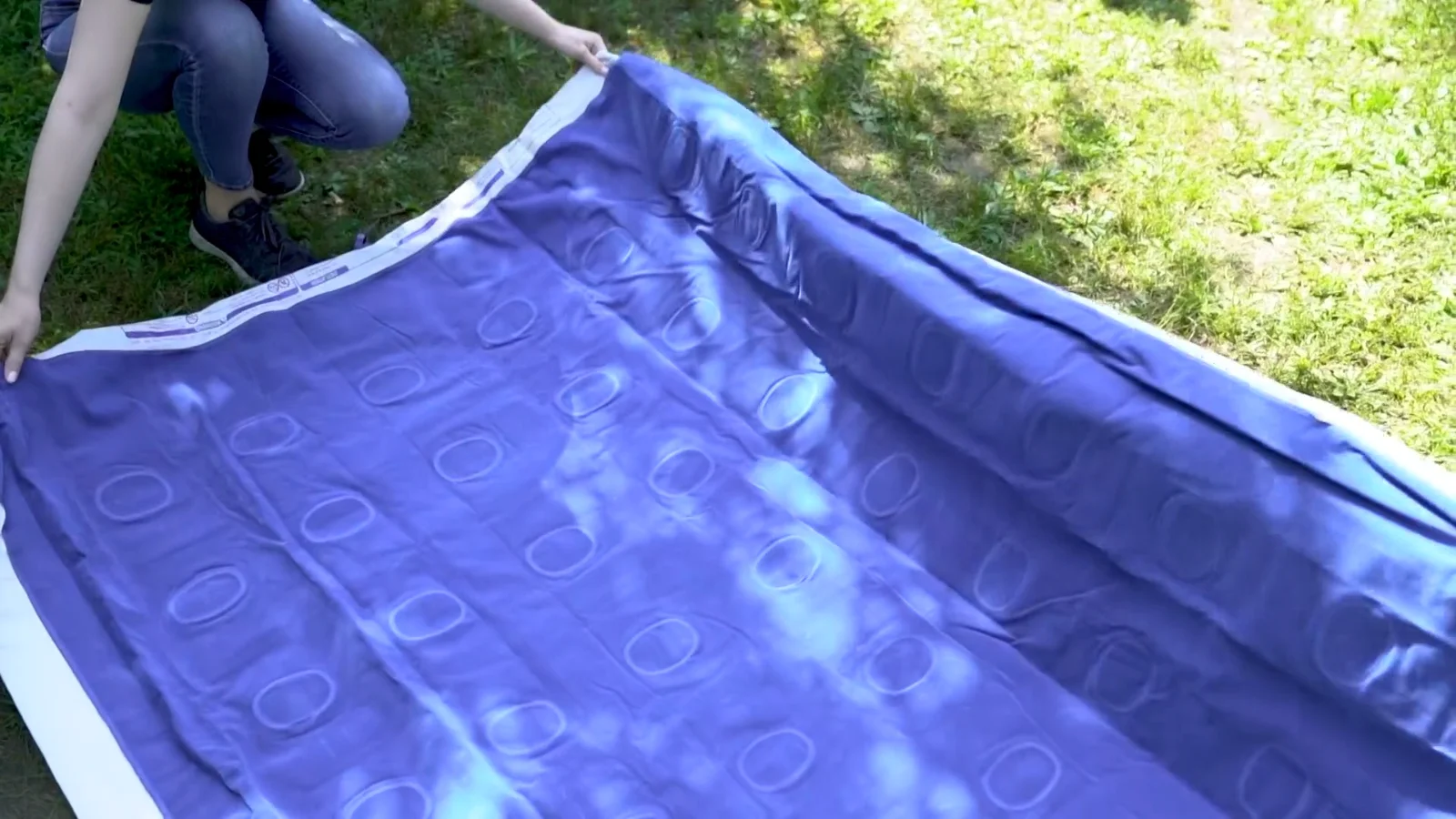

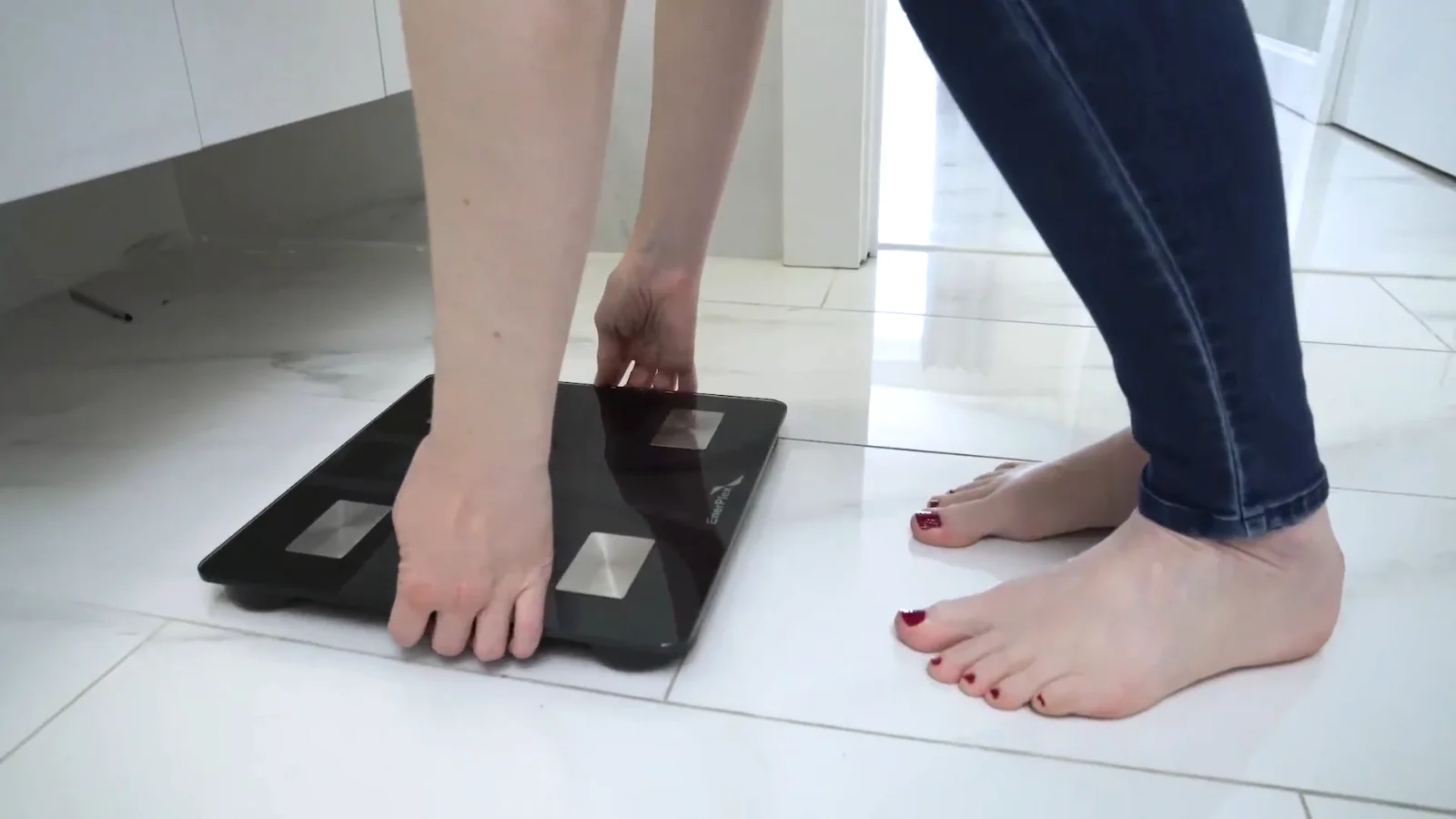
Airbeds look identical in photographs: a blue rectangle, a person smiling on it. The differences are all in places a photograph cannot show: the pump, the weld, the fabric weight and what the bed is doing at four in the morning.
Two honest notes belong under this table.
| What to check | The EnerPlex answer | The budget end of the market | Why it matters at 2 a.m. |
|---|---|---|---|
| Pump | Built into the bed, one dial, about two minutes each way | Often a separate inflator, sometimes sold separately | The bed you can set up half-asleep is the bed that gets used |
| Core construction | Welded coil beams pulling the surface flat | A single chamber that inflates into a dome | A flat surface sleeps two, a dome rolls both to the middle |
| Height | 13 to 18 inches on the home line | 8 to 10 inches is common | Double height is sitting height, and it clears cold floor air |
| Skin | Triple-layer puncture-resistant PVC, flocked top | Single-layer vinyl, bare top | Sheets stay put, and one Lego on the floor is not a funeral |
| Overnight firmness | Coil core, and a second automatic top-off pump on the flagship | Whatever the seam welds allow | Firmness at dawn is the entire product |
| Warranty | Two years on the airbeds | 90 days is common | A warranty shorter than the guest season is a disclaimer |
An airbed is not a mattress. Ours included. Air moves, vinyl stretches when new, and temperature changes pressure overnight: a new bed wants a top-off after its first nights while the material settles, and that is physics, not a defect. What a good airbed promises is a flat, firm, comfortable surface that arrives in two minutes and disappears into a closet, and on that promise we will stand next to anyone.
The checklist cuts both ways. If another maker answers every line of that table well, they have built a good bed and your guests will sleep fine on it. We publish the checklist anyway, because most of the market cannot answer it, and because a brand confident in its welds has nothing to lose by teaching you where to press.
Both pillows on this layer are filled with shredded memory foam behind a zip: open it, add or remove fill by the handful, and the loft matches the sleeper instead of the other way around. The public sleep guidance is boringly consistent, the same dark, quiet, comfortable bed every night; this is the comfortable part.
Fifty-four inches of shredded memory foam behind a zip: add or remove fill until it matches the sleeper, then wash it as one piece.
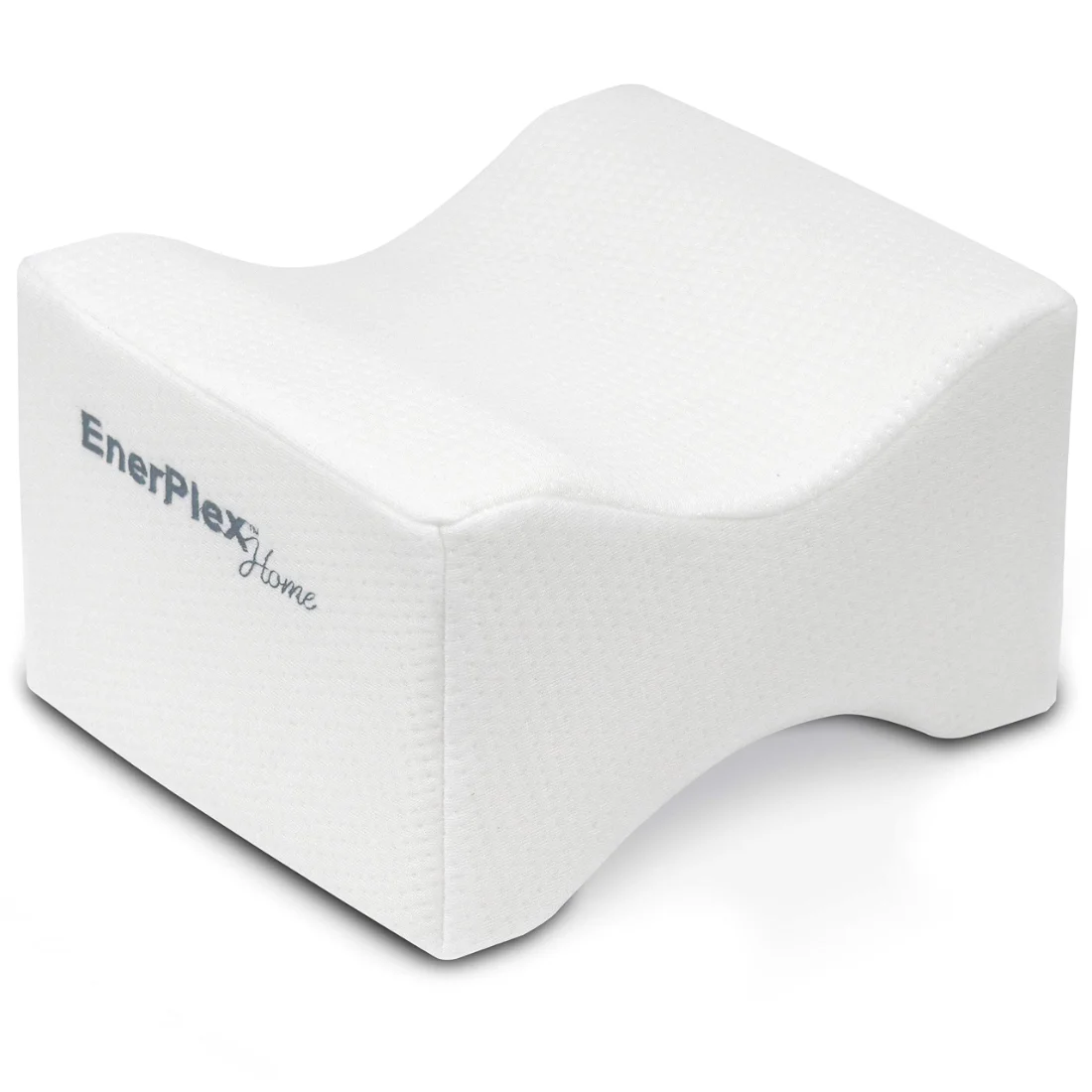
A contoured wedge of CertiPUR-US certified foam that keeps knees apart and hips level for side sleepers, with a washable zip cover.
What a sleep brand runs on is a handful of benches, each with one job it refuses to share: the weld, the pump, the fabric, the fill. Every bed that carries our name crosses all of them before a box ships, and most of them more than once.
the weld bench
Owns the coil-beam cores, the seam welds and the valves. The bench rule is blunt: a bed that loses its firmness overnight is a failed bed, whatever else it does well. Every design change answers to that rule before it answers to cost.
the noisy bench
Owns the built-in pumps, the detachable camping pump and every plug in the kit. Measures its work in seconds on the clock and decibels at the bedside, and considers the car adapter in the camping bag its proudest small decision.
the touch bench
Chooses the PVC layup, the flock on the sleeping surface and the shredded foam in the pillows, and keeps the CertiPUR-US paperwork current. Anything that touches a sleeper's skin crosses this bench first.
the quiet bench
Looks after the scales: sensors, glass, the Bluetooth handshake and the app that keeps the trend line. Holds the unfashionable opinion that a scale's first duty is to repeat itself, and tests exactly that.
the answering bench
Reads every warranty message and ships the replacements. The two-year promise on the airbeds lives or dies at this bench, and the reviews that mention us by name are usually about it.
the checking bench
Keeps this site honest: prices from the last update, ratings counted once per family pool, and a standing request to be told when a number looks wrong. The page called How we update this catalog is this bench's contract with you.
EnerPlex Fit is the smallest layer of the range: two Bluetooth body composition scales that send each weigh-in to the phone app. One number on one morning means little; the app keeps the trend line, which is the number that actually says how the season is going.
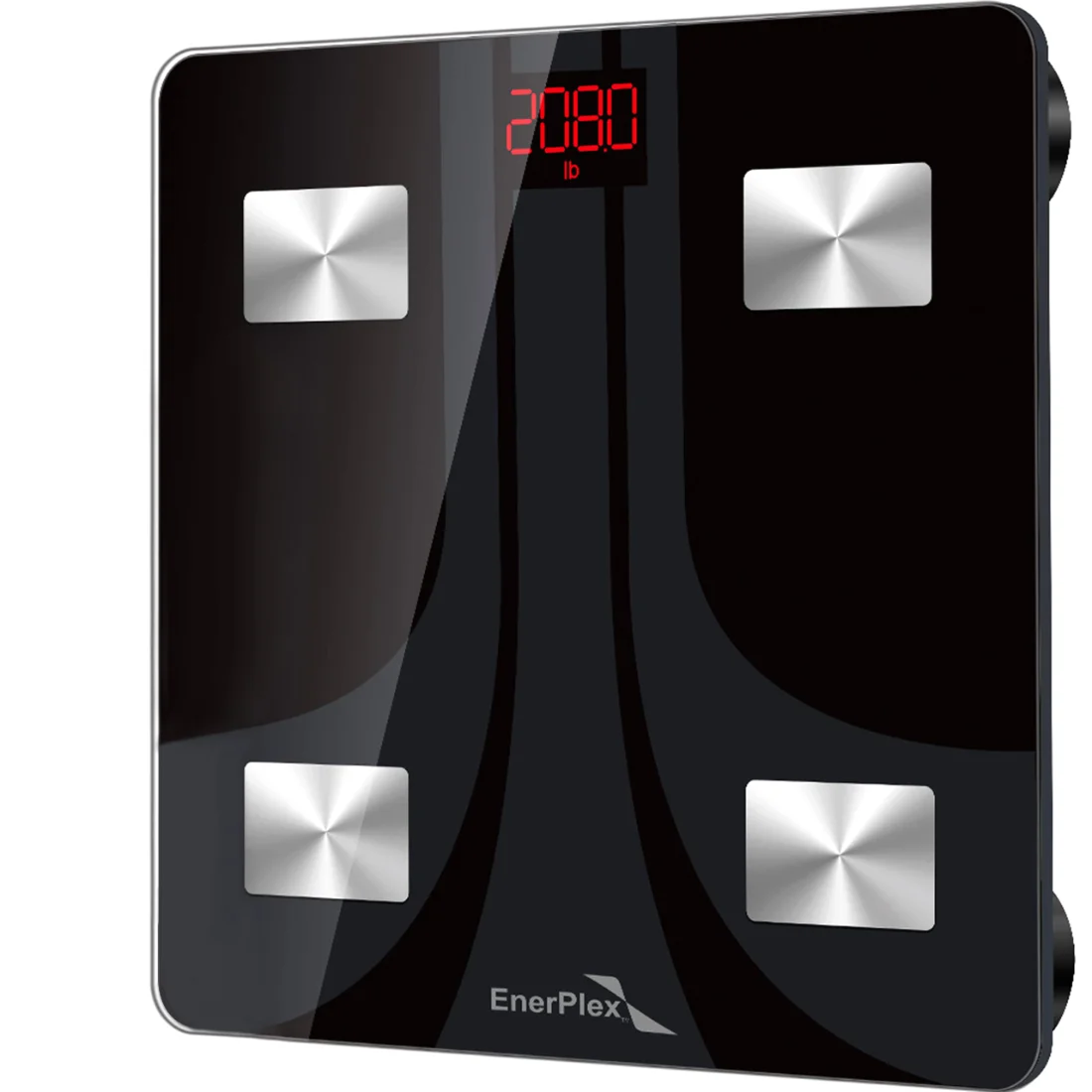
Black tempered glass over four sensors: every weigh-in lands in the app by Bluetooth, and the trend line does the honest talking.
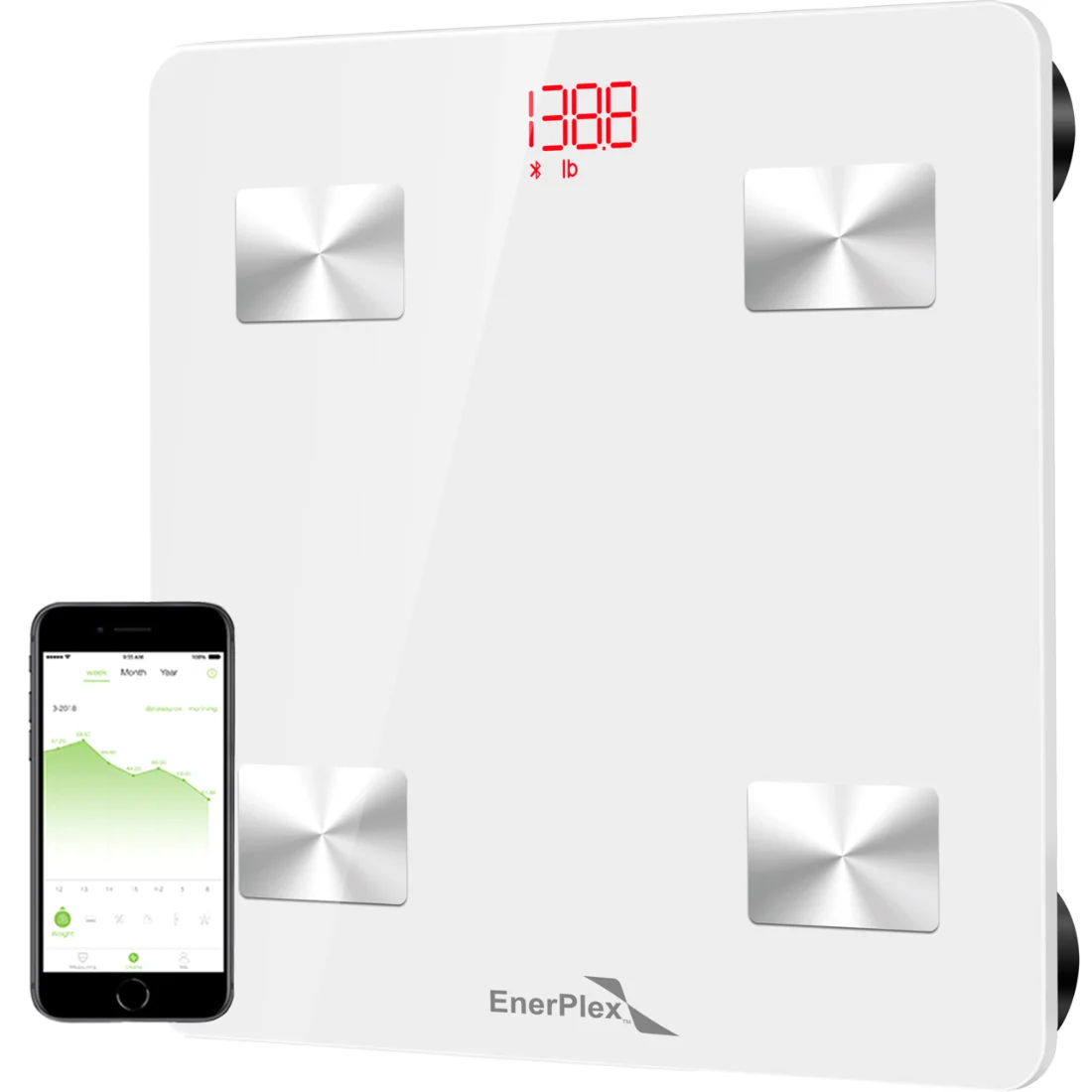
The white version of the Fit scale: same sensors, same app, same rule that a week of mornings beats any single one.
Plain-purpose note. A bathroom scale is a household measuring tool, not a medical device, and nothing on this page is health advice. Questions about weight, body composition or sleep belong with a clinician, not a catalog.
Certification language sells bedding, and most of it cannot be checked. One programme behind our pillow fill can: CertiPUR-US runs a public directory that anyone with a browser can search. Everything else about our materials is a description of what it is made of, not a badge somebody issued.
CERTIPUR-US
The memory foam in our pillow line is CertiPUR-US certified. The program is run by a nonprofit, not by foam makers marketing to you: certified foam is made without formaldehyde, ozone depleters, regulated phthalates, mercury, lead or other heavy metals, is screened against flame retardants classed as carcinogens, and passes a low-emissions test for indoor air quality. The program keeps a public directory of participating companies, which is what makes the words on this card worth anything.
THE WARRANTY
The airbed line carries a two-year warranty, and the measure we hold ourselves to is not the certificate but the customer record: buyers who write about our warranty describe replacements that actually arrived. That is the whole point of a warranty, and we would rather be known for honoring it than for framing it.
WHAT WE DO NOT CLAIM
No medical claims: a knee pillow can make side sleeping more comfortable, and it is not a treatment for anything. No organic-textile theater on a PVC airbed. No invented test-lab logos. Where a product's own page states a rating, a capacity or a certification, we repeat it. Where it does not, this site stays quiet rather than creative.
A hallway at midnight, a tent floor in October, a pillow that arrived flatter than expected and came good after a day. Owners in their own words, with the four-star and three-star nights included.
This airbed is more comfortable for me than my $1,300 memory foam mattress, which is about three years old.
erinxgreen
United States · August 27, 2025
I purchased this air mattress/bed after reading all of the positive reviews and I'm glad that I did. All the positive points were accurate; inflated quickly, good quality,etc.
Mark Trahan
United States · April 28, 2020
I’ve been sleeping on this air mattress for about two weeks now after moving and waiting for my new mattress to arrive. It is very comfortable and so far very durable. (I’m a female. Around 130 pounds).
lure101
United States · December 13, 2023
I purchased this bed after doing a good amount of research. My major deciding factor was the claim of the fastest pump on the market.
Debbie F
United States · January 19, 2019
Ninth update, November 15, 2024 We've been sleeping on this mattress nightly for two years now. Re-reading my review, I see that I last added air to the mattress a year ago.
carobearo
United States · November 25, 2022
I kept going back and forth bc of the price tag but it was 100% worth it, our sensory sensitive toddler son loved this on vacation.
Sara C.
United States · June 20, 2022
I enjoy this my pillow quite a bit. It's by far the best body pillow I've ever had. It really "holds it's shape". Hasn't gone flat, and I don't even have to fluff it.
Jennifer
United States · August 9, 2021
I think this is a little too thick for most people, your top leg goes higher than needed.
david
United States · December 31, 2020
It works very well. It can read, remove data, and export to CSV. I don't know if the measure is accurate as I don't have another one to compare. I love all the bio-impedance data and the ability to save data for further analysis.
C. Liu
United States · January 6, 2023
About the brand
EnerPlex exists because of a specific, unglamorous moment that almost every household knows: it is late, someone you love is standing in the hallway with a bag, and the honest answer to "where will they sleep?" is a couch that ruins backs or a floor that ruins mornings. We build for that moment. Not for showrooms, not for catalogs of imaginary bedrooms, but for the two minutes between opening a closet and turning off the light.
That focus sounds narrow until you try to do it well. A bed made of air has to be engineered against its own nature. Air wants to bulge into a sphere. A sleeper needs a plane. Air cools and contracts at night. A sleeper needs the same firmness at dawn that they chose at lights-out. Vinyl is slippery. Sheets need grip. A pump is a motor. A bedroom needs quiet. Every product we make is a running argument with those four facts, and the argument has produced everything you see on this page.
Our home line answers the first complaint anyone has ever had about an airbed: that it feels like camping indoors. Double height changes that relationship completely. At sixteen or eighteen inches, the sleeping surface stands where a real mattress stands. Guests sit down onto the bed and stand up out of it, the way they do at home, instead of lowering themselves to the floor and climbing back out of it like a swimming pool. Height also lifts the sleeper away from the coldest layer of air in the room, which is the part of floor-sleeping nobody misses.
Inside the chamber, dozens of welded coil beams pull the top flat and share the load, so the edge holds a sitter without catapulting the person in the middle. On top, flocking gives the sheets something to hold. Underneath, a textured base keeps the bed where the room needs it. And on the side, the detail the whole brand is built around: a pump inside the bed itself, run by one dial, no attachments to find and no separate box to lose. Inflation takes about two minutes. Deflation, the part everyone forgets to ask about, takes about the same, and the bed folds back into a bag that fits a closet shelf.
The camping series takes the same welded core and trades height for headroom: nine inches tall, light enough for a shoulder bag, with a detachable high-speed pump that runs from a wall plug the night before and the car adapter at the site. We added the kids travel bed after watching what families actually carry: a toddler-sized inflatable with a raised bumper on every edge and a footprint that standard crib sheets fit, so the one bed a small child trusts can come along to the grandparents' house.
Two product families grew out of listening to how people actually sleep on our beds. The pillows came first: shredded memory foam behind a zip, so loft is adjustable by the handful rather than fixed at a factory. The fill is CertiPUR-US certified, the covers wash, and the range runs from standard pairs to a fifty-four-inch body pillow and a contoured knee wedge for side sleepers. The Fit scales came second, out of the same preference for numbers that tell the truth over a season rather than on one morning. Each weigh-in goes to the app over Bluetooth, and the app keeps the trend line, which is the only version of that number worth reading.
| Line | Height or format | Built for | The detail that defines it |
|---|---|---|---|
| Home airbeds | 13 to 18 inches | Guest rooms, moves, first apartments | Pump built into the chamber, one dial |
| Pillow-rest and premium | 13 to 16 inches | Frequent hosting | Raised head end, dual-pump top-off on the flagship |
| Camping series | 9 inches | Tents, cabins, truck beds | Wall and car power in the same kit |
| Kids travel bed | Toddler-sized | Trips with small children | Bumpered edges, crib sheets fit |
| Memory foam pillows | Adjustable loft | Every bed in the house | Shredded certified fill behind a zip |
| Fit scales | Bathroom format | The morning after | Bluetooth trend line in the app |
An airbed is the best temporary bed we know how to build, and it is a temporary bed. A new one wants a top-off across its first nights while the vinyl settles and the welds find their shape; after that a sound chamber holds a weekend without a thought. A knee wedge is comfort equipment, and comfortable is the whole of what it does: no shape of foam treats anything, and pain that persists belongs with a clinician. The one certification our foam carries, CertiPUR-US on the shredded fill, sits in a public directory that anyone can search, which is the only kind of certificate worth naming.
Somewhere north of fifty-eight thousand ratings sit across our product families, and the words in them have moved more of our design than any meeting has. Buyers wrote that pillows arrived flatter than expected: shredded fill ships compressed and wants a day and a few handfuls of fluffing before anyone judges it, and that now goes on the card rather than in the small print of a manual. Campers wrote that the pump was the reason they bought a second bed for the house, and the built-in pump went from a feature to the first problem every new design has to solve. Both of those arrived in four-star reviews. Neither arrived in a five-star one.
We make a narrow set of things and make them repeatedly better: beds that hold air, pillows you tune yourself, and a scale that keeps score honestly. Underneath all three sits one belief, that a guest bed should be a solved problem. If your hallway moment comes tonight, the whole answer is a closet shelf, a wall socket, and about two minutes of pump noise. That is the entire company, and we are content for it to be.
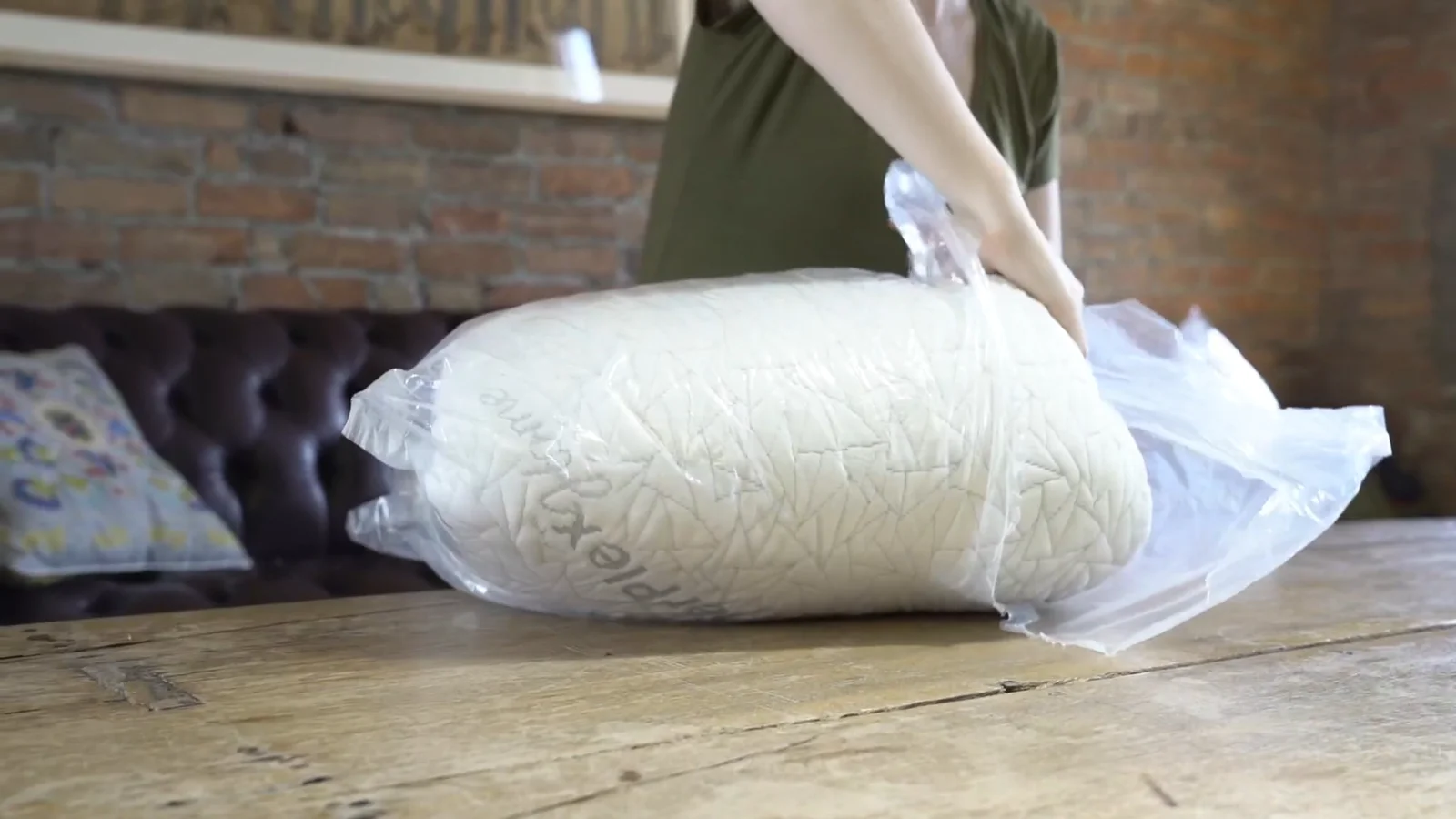
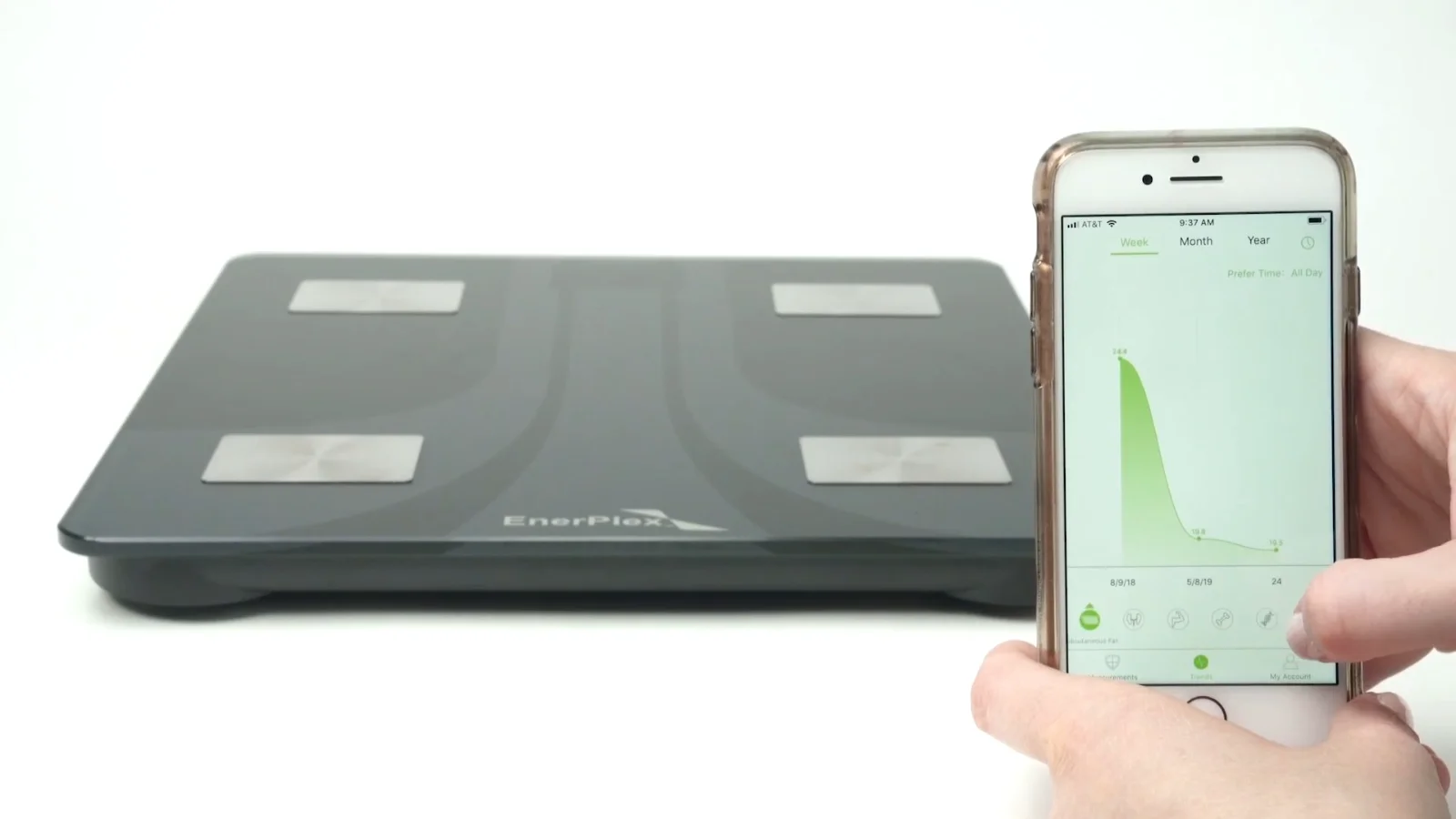
How a closet becomes a guest room in two minutes, how to sleep warm off the ground, and how loft, alignment and a morning number fit together. The safety figures come from the bodies that publish them, with the date beside each one.
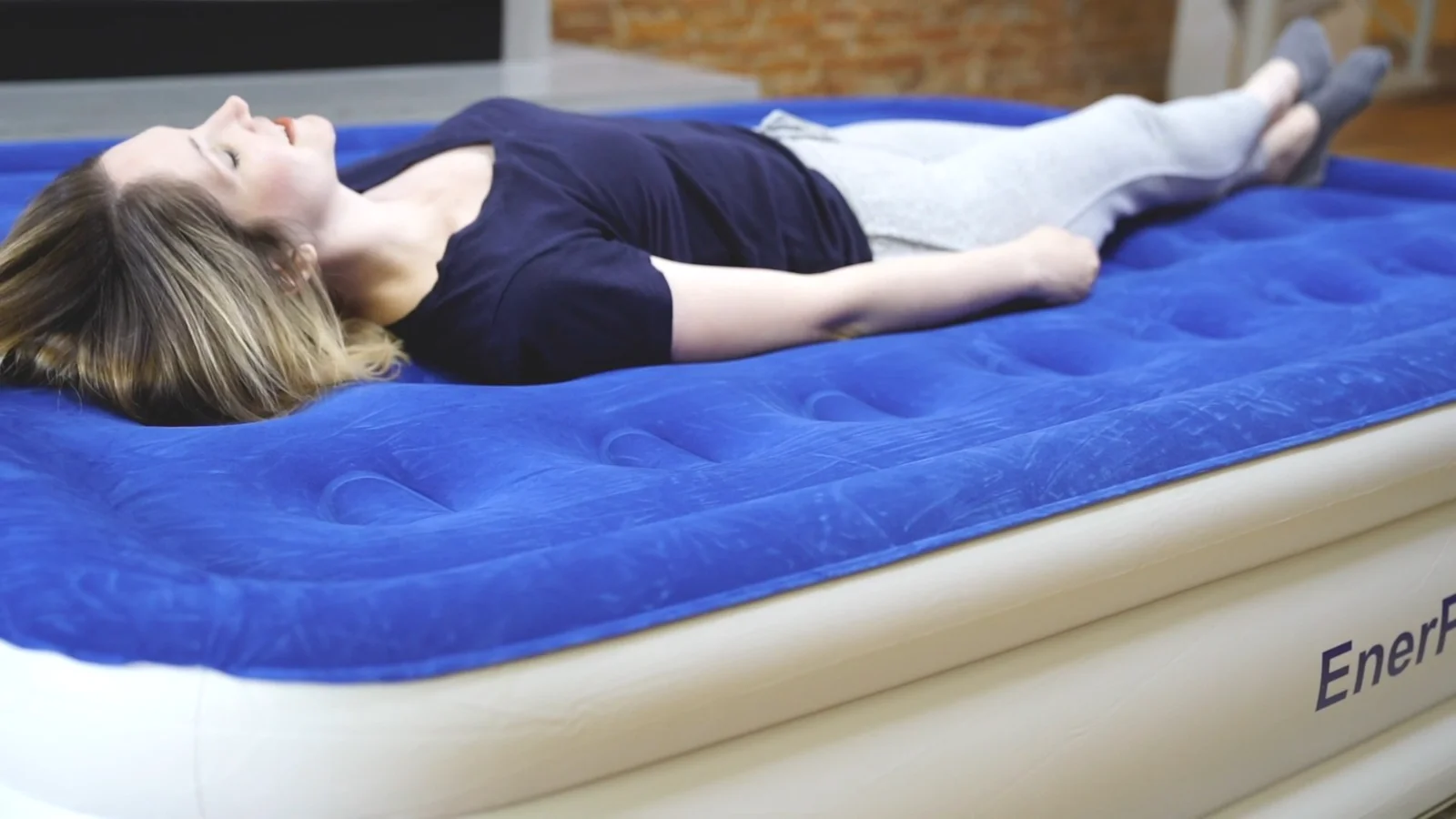
Layer 01, unpacked
A spare room is a luxury; a spare bed only needs a closet shelf. How double height changes who can actually sleep on an airbed, what the built-in pump does at 11 p.m. that a separate inflator never will, which size fits which room, and the five-minute routine that keeps a guest bed guest-ready for years.
Read the guide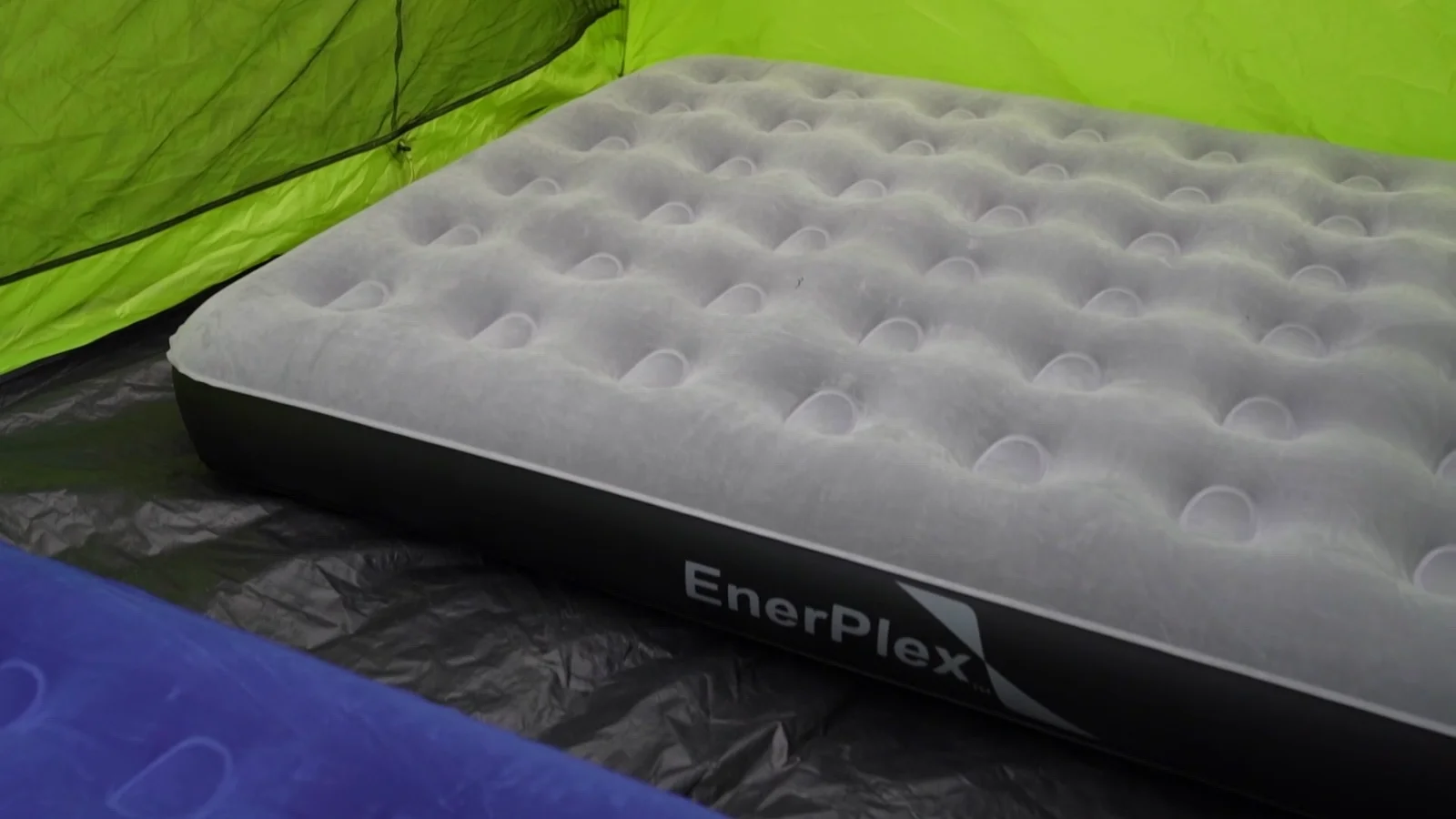
Layer 02, outdoors
The ground steals more sleep than the owls do. Why the rangers put a layer under you before anything else, what nine inches of air does that an inch of foam cannot, how to run a pump where there are no outlets, and the toddler question every camping family eventually asks.
Read the guideLayers 03 and 04
The pillow is the last inch of the bed and the first thing to blame. What loft actually is, why a zip full of shredded foam beats a firmness label, where a knee wedge fits into a side sleeper’s night, and how a bathroom scale becomes useful the day you stop reading it one morning at a time.
Read the guidePlain-purpose note. EnerPlex builds sleep equipment; nothing on this page is medical advice, and the sleep and safety guidance we quote links to the public bodies that publish it, with the date we read each page. The instructions packed with each product outrank anything written here, and infants up to 1 year never sleep on an inflatable surface.
